>
Snowy STEM Academy

A Snowy 2.0 3D experience

A Snowy 2.0 3D Experience

In this interactive, your students will join one of our electrical project engineers for a behind-the-scenes look at Snowy 2.0, Australia’s largest-ever hydro project and one of the most ambitious engineering feats of our time. The unit begins with how 3D modelling brings invaluable insight into planning complex structures that are unmatched by 2D mapping alone.

Tailored for high school students with interest in problem solving, engineering and design, this lesson explores how a power station built in caverns big enough to fit the Sydney Opera House will fit in and the 28km of tunnels carved beneath the Snowy Mountains.

From a practical activity to highlight the skills used by Snowy Hydro’s engineering team to virtual walk-throughs and real-world engineering insights, this lesson brings STEM to life in an unforgettable way.

Lesson guiding video

Lachlan will guide you through this lesson by introducing the complex problem solving required for the Snowy 2.0 build. Use this video to introduce the lesson and pause and play as you need to discuss the amazing concepts introduced.
After conducting the practical activity, Lachlan will walk you and your students through how their problem solving during the activity and other skills honed by games (such as MineCraft) that students already engage in relates to the work our Snowy Hydro engineers do every day!

Back to all resources

Key information

Learning area: STEM
Suitable for: year 7-10
Topics: engineering, STEM
Duration: 60-90 minutes
Preparation: for activity
Materials: Household materials or Lego

Resources

All teaching resources

This folder contains all teacher and student resources for this unit. By downloading this folder, you won’t need to download the individual files below.

Lesson guide

Practical Activity Guide (Teacher)

Back to all resources from Snowy STEM Academy

>
Snowy STEM Academy

How Snowy 2.0 unearthed an ancient mystery

How Snowy 2.0 unearthed an ancient mystery

The unit begins with the phenomenon of discovering a coral reef, or the fossil of one, buried in the Snowy Mountains during excavation for Snowy 2.0. Students investigate the properties of different rocks to explore how they hold clues about Earth’s past and reveal how landscapes have changed over millions of years. This exploration shows how much is going on beneath our feet and why large infrastructure projects, like Snowy 2.0, rely on geology and environmental science to understand the ground they are built on. Tracing the evidence of this ancient coral reef highlights how studying rocks can uncover the history of our planet while informing the future of engineering projects.

Lesson guiding video

Kara and Tanya will guide you through this lesson, introducing the other-worldly discoveries they encountered while digging a tunnel for Snowy 2.0. Use this video to introduce the lesson and pause and play as you need to discuss the amazing concepts introduced.
After conducting the practical investigation, Tanya and Kara will walk you and your students through how their discoveries during the in-class activity relate to real life industry problem solving.

Back to all resources

Key information

Learning area: STEM
Suitable for: year 5-6 classrooms
Topics: geology, engineering
Duration: 60-80 minutes
Preparation: for activity
Materials: Household materials

Resources

All teaching resources

This folder contains all teacher and student resources for this unit. By downloading this folder, you won’t need to download the individual files below.

Lesson guide

Teacher resources

Back to all resources from Snowy STEM Academy

>
Snowy STEM Academy

Going underground

Going underground

Learn more about the reasons for tunnel boring and going underground as Dr. Kirsten and Manager Plant Engineer, Cameron head 366 metres underground to showcase Tumut 1 Power Station.

To get underground, there were many iterations of machinery. Currently, Snowy Hydro’s project Snowy 2.0 uses a few different Tunnel Boring Machines (TBMs).

It has been a long standing tradition, since the 1500s, for tunneling machines to be named after women. They also must be named before they are launched.

Back to all resources

Key information

Learning area: STEM
Suitable for: year 5-8 classrooms
Topics: engineering, technology, physics
Duration: 30-45 minutes
Preparation: none
Materials: none

Resources

All teaching resources

This folder contains all teacher and student resources for this unit. By downloading this folder, you won’t need to download the individual files below.

Lesson guide

Snowy 2.0’s newest Tunnel Boring Machine

This unit showcases our first three TBMs, but in late 2025, the fourth TBM on the Snowy 2.0 project has been named after a talented Tumut High School student who scooped top prize in an Indigenous art and storytelling competition.

Aspiring engineer Monica Brimmer, 15, wowed the judging panel with a stunning piece that reflected the spirit and purpose of Australia’s largest renewable energy project.

Inspired by flowing water, connected dams, mountains, energy, an underground power station and a connection to Country, Monica’s creation was awarded top marks in the competition, organised by Snowy Hydro in partnership with the Stars Foundation and Tumut High School.

Take a look at Monica’s entry and artwork

How TBM Monica is being transported

TBM Monica’s centre cutterhead piece was transported through Cooma en-route to the Marica worksite north of Kiandra.

What weighs more than 137 tonnes, is seven metres wide and is transported by 152 wheels?
An integral piece of Snowy 2.0’s new tunnel boring machine’s cutterhead!

At 73 metres long, the transfer was a sight to behold as it travelled up Sharp Street bound for the final leg of its journey on the Snowy Mountains Highway.

The cutterhead – which is the main excavation tool of a TBM – is too large to move in one piece and has been split into five. More than 140 big loads had been delivered to the Marica site from Port Kembla over the weeks preceding this big move.


More than 1500 people converged on Cooma on Sunday, October 12 to welcome the latest Snowy 2.0 big rig – one of the largest traffic loads ever transported in NSW.

The main drive of TBM Monica – an integral component of the project’s fourth mega borer – drew an excited crowd of onlookers to Cooma town centre.

Spectators also flanked driveways and homes between Bredbo and Adaminaby to catch a glimpse of the big rig.

The convoy tipped the scales at a mammoth weight of more than 450 tonnes – across five trucks and a trailer, driven by 210 wheels across 35 separate axles. Snowy Hydro Head of Social Impact and Community Sarah Norris described the transfer as a major milestone for both the project and the community.

“We were blown away by the attendance – it was a truly special evening, with an incredible atmosphere, as people lined the footpaths for the best vantage point to watch,” she said.

“It almost felt like a festival was taking place – we had free hot choccies and coffees and talented musician Leon Fallon on-hand to keep the crowd entertained

“Thanks to everyone who attended, we appreciate there were quite a few little people that stayed up past their bedtimes to witness a little piece of Snowy history.”

The mega transfer evoked memories for some community members of the mighty Thornycroft Antars hauling machinery and construction equipment through Cooma as part of the original Snowy Scheme decades ago.

There are 23 oversize loads being carefully planned and transported to Snowy 2.0 sites over the coming weeks associated with the assembly of TBM Monica.

Back to all resources from Snowy STEM Academy

>
Snowy STEM Academy

Dams and reservoirs – transforming the energy of water

Dams and reservoirs
transforming the energy of water

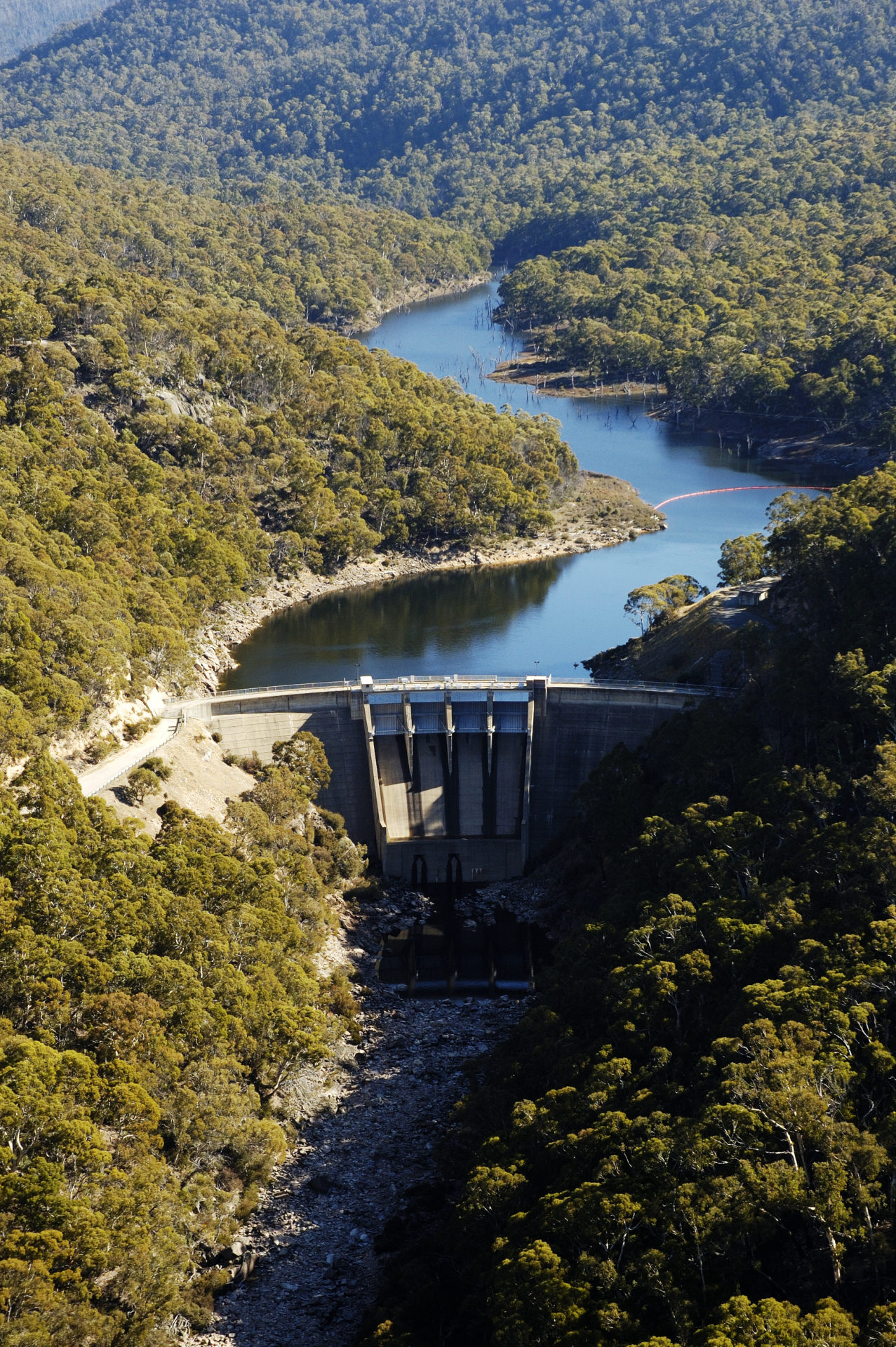
Dams are an integral part of the Snowy Hydro Scheme. They are used to create reservoirs which store water. Although the dam is an engineering feat in itself, it’s the transformation of energy through moving this stored water that is key to generating hydropower.

In this unit you will

-be introduced to dams and reservoirs
-learn about the anatomy of an effective dam
-see how Snowy Hydro uses gravity to transform the energy in water.

Back to all resources

Key information

Learning area: science
Suitable for: year 7-9 classrooms
Topics: energy, water, physics, engineering
Duration: 90-100 minutes
Preparation: required if wanting to replicate dam activity.
Materials: specialist materials required to replicate dam activity.

Resources

Resources that match each section of this resource are displayed next to the video resource.

Curriculum links

This unit is currently undergoing a curriculum mapping refresh. Thank you for your patience while this is updated.

Is it a dam or a reservoir?

In this video Dr. Kirsten chats with, Ryan, Manager Plant Engineering  about water storage. Learn the difference between dams and reservoirs with Dr. Kirsten and Ryan at the Khancoban dam wall. 

The anatomy of a dam

Being able to store water and its potential energy is a key in Snowy Hydro’s hydropower generation. Storing water in multiple reservoirs behind dams allows the water to be accessed to generate power as it is released. Dam safety is determined by the dam’s structure and build. Take a look at what goes into the creation of a dam.

Using gravity to transform the energy of water

Learn about the power of gravity and the role this natural force plays in the generation of hydro-electricity.

Follow Dr. Kirsten and Mechanical Plant Engineer, Joe to the depth of Murray 1 Power Station as they dive into discussing gravity.

Back to all resources from Snowy STEM Academy

>
Snowy STEM Academy

Sciences of the Snowy Scheme with Dr. Kirsten Banks

The Sciences of the Snowy Scheme with Dr Kirsten Banks

Start your Snowy journey and learn about the Snowy Scheme. Dr. Kirsten Banks is a Wiradjuri astrophysicist, science communicator, Snowy 2.0 tunnel boring machine (TBM) namesake and is a brilliant inspiration to the next generation in STEM.
Follow Dr. Kirsten as she provides a comprehensive overview of the Scheme. 

It is recommended to view this video first to gain an overall insight into the Scheme operations before launching into the rest of the Dr. Kirsten Banks learning modules.

Back to all resources

Key Information

Learning area: STEM
Suitable for: All Year Levels
Topics: electricity, energy, engineering, water
Duration: optional. this resource begins a path to more Snowy Hydro resources
Preparation: none
Materials: none

About this resource

Dr. Kirsten is an incredibly interactive guide who will take you and your students through the Snowy Scheme.
View this video first with your class for context, then follow the resource trail below to navigate between the pieces of the Snowy Scheme.

Explore the other Snowy STEM Academy resources

**Note that content and activities within these following resources cater to differing age groups. While the Kirsten Banks videos are relevant for all year levels, the following resources may not be.

Back to all resources from Snowy STEM Academy

>
Snowy STEM Academy

Calculating surface area and volume

Calculating area, surface area and volume

Use Snowy Hydro’s real world examples of maths to engage year 8, 9 and 10 students. These everyday practical examples link the workplace at Snowy Hydro to a deeper understanding of maths. Use the series of targeted videos and accompanying activities to step through calculating area, surface area and volume. Students will discover that maths is all around us and see how these core concepts are used every day to support key operations in hydropower stations.

Back to all resources

Key information

Learning area: Maths
Suitable for: year 8-10 classrooms
Topics: maths: surface area, volume, design
Duration: 60-120 min
Preparation: none
Materials: containers, measuring cylinder

Resources

All teaching resources

This folder contains all teacher and student resources for this unit. By downloading this folder, you won’t need to download the individual files below.

Lesson guide

Back to all resources from Snowy STEM Academy

>
Snowy STEM Academy

Weather’s role in hydropower

Weather’s role in hydropower

The weather is an integral part of the Snowy Hydro power generation story. Learn the importance of monitoring and understanding the weather, the seasons and how it all plays a crucial role in the movement of water and generating of renewable energy.

Travel to the Guthega Meteorological Station in winter with Dr. Kirsten and Hydrographic Program Improvement Lead, Mic.

Back to all resources

Key information

Learning area: science
Suitable for: year 3-5 classrooms
Topics: environment, water, geography
Duration: 60-70 minutes
Preparation: minimal preparation for making snow activity
Materials: Household materials required

Resources

All teaching resources

This folder contains all teacher and student resources for this unit. By downloading this folder, you won’t need to download the individual files below.

Lesson guide

Snowflakes Fact sheet

Hands-on activities


Snowflake activity

Use the video as a guide or demonstration.

Make your own snow

Back to all resources from Snowy STEM Academy

>
Snowy STEM Academy

The water cycle and Snowy Hydro

The water cycle and Snowy Hydro

Water is integral to Snowy Hydro’s operations.

The water cycle, also known as the hydrologic cycle, is the continuous path that all water follows. Learn how Snowy Hydro works with the water cycle to harness the power of water to generate renewable energy.

Visit the Snowy Scheme’s largest and central storage reservoir, Lake Eucumbene with Dr. Kirsten and Manager Water Modelling, Jeremy. Find out why this body of water is important to the Scheme’s operations and learn all things water at Snowy. 

Back to all resources

Key information

Learning area: science
Suitable for: year 7 classrooms
Topics: water
Duration: 60 minutes
Preparation: minimal required for each teacher demonstration. minimal required for activity.
Materials: household materials required for teacher demonstrations. household materials required activity.

Resources

Teacher demonstrations

Hands on activity

Curriculum links

Find below the curriculum links for these resources. Please note that these are mapped to ACv8.4. Updates are coming soon.

Back to all resources from Snowy STEM Academy

>
Snowy STEM Academy

Women in STEM

STEM Careers

Celebrating the contributions of women to STEM

At Snowy Hydro people are our greatest assets. This unit provides an opportunity to reflect on possible STEM careers. Students can then research women’s contributions to STEM and make a “pitch” to hypothetically name the next Tunnel Boring Machine (TBM).

The STEM careers research project introduces students to the idea of Science, Technology, Engineering and Maths (STEM), as a career path, while extending their knowledge and learning experience to discover more about possible careers in STEM explored by great Australian women in STEM from Snowy Hydro and beyond.

Get started introducing your students to STEM careers as Dr. Kirsten speaks with five of Snowy Hydro’s inspiring women working in STEM. Learn more about their role at Snowy and gain valuable insights into their motivations and inspirations before starting a STEM career reflection.

In this video you will meet Senior Environmental Adviser, Alex; Electrical Cadet, Laura; Senior Climate Scientist, Johanna; Engineering Cadet, Meg; Electrical Apprentice, Sallie

Back to all resources

Key information

Learning area: STEM careers
Suitable for: high school classrooms
Topics: engineering, science
Duration: 60-150 minutes for all projects
Preparation: providing research sheets to students
Materials: none

Resources

All teaching resources

This folder contains all teacher and student resources for this unit. By downloading this folder, you won’t need to download the individual files below.

Lesson Guide

Reflection on STEM careers

Research project: Discover women’s contributions to STEM

After watching the videos showcasing STEM careers, conduct a guided research project.
Choose and research a particular person’s contribution to their field.

Get to know our Snowy STEM Women

International Women’s Day Panel

Sara – Graduate Mechanical Engineer

Alex – Graduate Civil Engineer

Raelene – Functional Services Lead

Winnie – Strategic Engineer

Emilie – Geotechnical Engineer


Make a pitch to name the next Tunnel Boring Machine (TBM)

Did you know that our TBMs are named after women, with three of our four Tunnel Boring Machines named after significant women in STEM?

With research templates to suit different research styles, use these to research a woman in STEM and make a pitch to have a hypothetical Tunnel Boring Machine named after them!

To learn more about our TBMs you can view the Going Underground resource.

Back to all resources from Snowy STEM Academy

>
Snowy STEM Academy

Snowy 2.0

Snowy 2.0

In this Module, learn how Snowy 2.0 will play a major role in offering stability in the Australian Energy Market by providing on-demand energy and large scale storage capacity. It will link two existing reservoirs, Tantanagara and Talbingo. At periods of high demand, Snowy 2.0 will generate electricity using this stored water and when the demand for energy is low the water will be pumped back to the upper dam.

Snowy 2.0 – an introduction

Back to all resources

Key information

Learning area: science
Suitable for: year 4 – year 12 classrooms
Topics: technology, engineering, energy
Duration: 90 minutes
Preparation: links for interactives and knowledge quest sheets provided to students
Materials: not required

Resources

Curriculum links

This unit is currently undergoing a curriculum mapping refresh. Thank you for your patience while this is updated.

Snowy 2.0 – The big picture

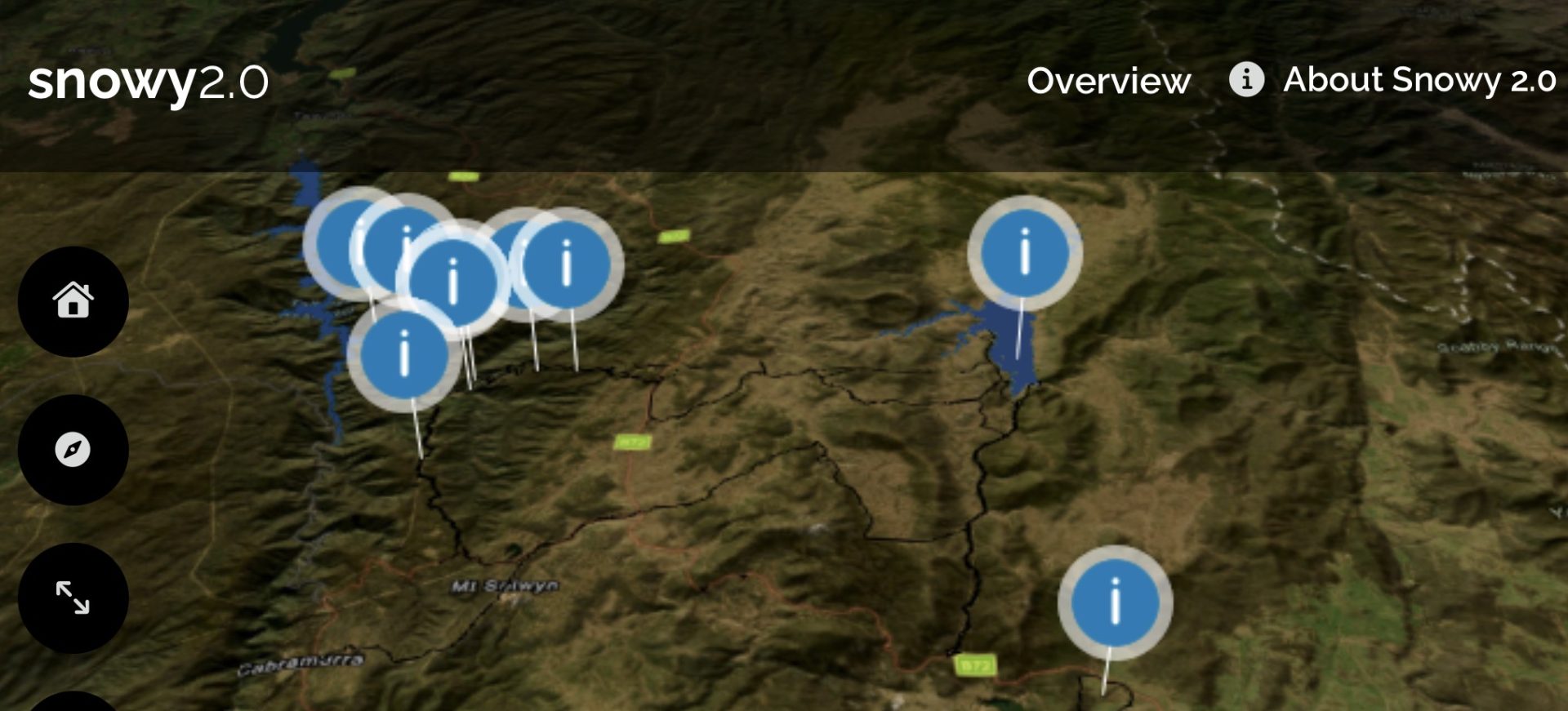
This digital pop up book opens in a new tab. It provides context to the requirement for building Snowy 2.0 and the impact that it will make on the National Energy Market. This resource contextualises this infrastructure build in terms of economic and societal contributions as well as advancement in engineering and sciences to get this project running.

Digital Pop Up Book Opens in a new tab

Student resource

This resource is most suitable for years 4-7

Teacher answer key

Back to all resources from Snowy STEM Academy

>
Snowy STEM Academy

Turbines and power generation

Using turbines to generate power

Through our video and learning resources explore how hydro-electricity is generated to produce clean renewable energy. Snowy Hydro has eight power stations comprised of 33 turbines, with a total generating capacity of 4,100 megawatts. Most of the turbines used in the Snowy Scheme are Francis turbines, which are installed vertically.

How turbines create electrical energy from water

For the turbines to generate electrical energy, they need to use energy from the water first. Get excited about energy generation with Kirsten as she chats with Engineering Cadet, Meg and Manager Access & Assurance, Aaron to learn more at Tumut 3 power station about using energy to make energy.

Using energy we have now to create energy later

The Francis turbines in Tumut 3 power station have the widest range of pressure applications and are designed with the capability to generate electricity and to pump water.

Join Dr. Kirsten again with Manager of Planning & Scheduling, Joey and Manager Access & Assurance, Aaron to learn about pumped hydro.

This is similar technology that will be used in Snowy 2.0 to use energy that we have now to move water that can create energy later.

Back to all resources

Key information

Learning area: science
Suitable for: year 7 classrooms
Topics: electricity, energy, engineering, physics
Duration: 120-140 minutes
Preparation: 5-10 minutes required for hands-on activities’ set up
Materials: household materials required

Resources

Activity sheet

Answers to this activity sheet are found in the Turbine fact sheet.

Curriculum links

Find below the curriculum links for these resources. Please note that these are mapped to ACv8.4. Updates are coming soon..

Other video resources

Back to all resources from Snowy STEM Academy

>
Snowy STEM Academy

Moving water through the Snowy Scheme

Moving water through the Snowy Scheme

Discover how the rain that falls in the mountains combined with the snow melt is collected, filling up our dams that are used to store the water.  The stored water is then used to generate electricity by running it through our Power Stations. It’s a complicated maze of reservoirs, dams, power stations and rivers that use the simple principle of water flowing downhill. Water that makes its way through the connecting networks (which we call ‘developments’) is then released into the Murray River, the Murrumbidgee River and the Snowy River for irrigation.

Back to all resources

Key information

Learning area: science
Suitable for: year 9-10 classrooms
Topics: water, engineering
Duration: 50-75 minutes
Preparation: none
Materials: not required

Resources

All teaching resources

This folder contains all teacher and student resources for this unit. By downloading this folder, you won’t need to download the individual files below.

Lesson guide

Activity sheets

Back to all resources from Snowy STEM Academy