News

Keeping the lights on for generations to come

26/02/2019

At Snowy, we have a proud history and a strong vision. Snowy Hydro, supercharged by Snowy 2.0, will underpin Australia’s renewable energy future and keep the lights on for generations to come.

Almost 70 years after the first sod was turned on the mighty Snowy Scheme, we will do it all again. Today, after consideration of our Board’s Final Investment Decision, we welcome Shareholder approval of Snowy 2.0.

“It’s an exciting time for our Company,” Snowy Hydro CEO Paul Broad said. “Snowy 2.0, like the original Snowy Scheme, is a nation building project that is vital to Australia’s economy and our energy transition.

“This significant expansion of the Snowy Scheme will provide the storage and on-demand generation needed to balance the growth of wind and solar power and the retirement of Australia’s ageing fleet of thermal power stations. In short, it will keep our energy system secure.

“Snowy 2.0 is not only a sound business investment for Snowy Hydro with over 8% return on investment. It also represents the most cost-effective way to ensure a reliable, clean power system for the future.

“When it is completed, Snowy 2.0 will be able to deliver 2000MW of on-demand generation, up to 175 hours of storage, and deliver more competition that will keep downward pressure on prices.

“We are committed to continuing to grow our portfolio of assets, to maximise competition in the National Electricity Market (NEM) and deliver more value to consumers,” Mr Broad said.

Last year Snowy Hydro contracted 888 megawatts (MW) of wind and solar projects which gave us incredible insights into energy pricing. This process confirmed many of the assumptions of Snowy 2.0’s business case, including that the National Electricity Market (NEM) has passed a tipping point. New renewables are now the most economic form of new generation, even when firmed by hydro or gas.

Snowy Hydro existing fast-start assets, and increased capacity with Snowy 2.0, will firm up large amounts of intermittent renewables by coming in and out of the system to ‘fill the gaps’ by generating energy at times of peak demand.

Snowy Hydro has a strong track record when it comes to pumped-hydro. For decades we’ve been successfully operating our pumping capability at Tumut 3 and that has been invaluable, especially in years of drought.

Snowy Hydro is the fourth-largest energy player in the NEM, providing much-needed competition in the market. Snowy 2.0, along with other developments, is adding to a portfolio that operates efficiently and reliably in a highly unpredictable NEM to maximise competition and drive the best outcomes for consumers.

Snowy 2.0 Exploratory Works will start immediately. The project is expected to generate up to 5000 jobs over the life of the project.

News

Snowy Hydro welcomes planning approval for Snowy 2.0 Exploratory Works

11/02/2019

Snowy Hydro welcomes the New South Wales Government’s planning approval for Snowy 2.0 Exploratory Works today. The decision, which follows a rigorous environmental and planning assessment process, is another significant milestone in progressing the project.

Snowy Hydro hopes to commence work for Snowy 2.0 soon, subject to Shareholder approval from the Federal Government.

Snowy Hydro CEO Paul Broad said NSW Government’s support for Snowy 2.0 is critical for the security, affordability and reliability of the National Electricity Market (NEM) in the future.

“The mighty Snowy Scheme keeps the lights on across the National Electricity Market at times of peak demand today, and Snowy 2.0 will build on our existing capabilities.

“With more intermittent renewables coming online Snowy 2.0 will create an additional 2000 megawatts of on-demand energy generation and 175 hours of large-scale storage so households and businesses have energy when they need it most.

“Snowy 2.0 will deliver reliable energy at times of peak demand and can ‘fill the gaps’ by generating when wind and solar energy output is low.

“Snowy Hydro takes its environmental responsibilities very seriously. We have a long and proven record of responsibly operating the Snowy Scheme within the national park and we will do everything possible to avoid or minimise impacts from construction of Snowy 2.0.

“Snowy Hydro will provide $10.5 million to offset any impacts from the Exploratory Works,” he said.

The NSW Government, which is responsible for allocating the offsets, has made the commitment that Snowy 2.0 offsets will be used by National Parks and Wildlife Service to support local environmental and recreational initiatives in Kosciuszko National Park.

Exploratory Works involve excavating an exploratory tunnel to gain a greater understanding of the underground geological conditions at the proposed location of the new Snowy 2.0 power station. The works also include upgrades and establishment of access roads, establishment of a construction compound and supporting infrastructure, and other activities.

Almost 50 years ago, exploratory tunnels were constructed for both Tumut 1 and Tumut 2 power stations, the two underground stations in the Snowy Scheme.

Snowy 2.0 will create jobs and economic opportunities across the Snowy Mountains – already more than 50 local businesses have been involved in the project.

In March 2018, Snowy 2.0 was declared NSW Critical State Significant Infrastructure, which provided a clear and well established framework for the project’s planning and environmental approval requirements.

An Environmental Impact Statement for Snowy 2.0 Main Works will be submitted to the NSW Government later this year.

For more information about Snowy 2.0, please visit snowyhydro.com.au.

News

Snowy Hydro appoints preferred tenderers for Snowy 2.0

18/01/2019

Snowy Hydro has appointed Australian and global experts in construction, engineering and hydropower as preferred tenderers for the Snowy 2.0 project, following extensive competitive tender processes over the last 18 months.

The preferred tenderer for the civil works is Future Generation, a partnership between Australian construction and engineering company, Clough, and global hydropower and tunnelling specialists, Salini Impregilo.

World leader in hydropower engineering and equipment supply, Voith Hydro is the preferred electrical and mechanical tenderer and will deliver the latest hydro-generation technology in the new power station.

Australian company Leed Engineering has also been awarded the contract for exploratory works pre-construction activities.

Contracts are currently being finalised, with contract execution subject to Shareholder approval of the project.

This is another important step towards the commencement of the project. Snowy 2.0 is a world-leading pumped-hydro project that, with the existing Snowy Scheme, will underpin the stability of the energy market as more renewable energy enters the system.

News

Snowy 2.0 approved by the Board

12/12/2018

Today, the independent Board of Snowy Hydro Limited approved a final investment decision to proceed with Snowy 2.0, subject to Shareholder approval.

Snowy 2.0 is a pumped-hydro expansion of the existing Snowy Scheme, providing 2000 megawatts (MW) of on-demand generation and 350,000MW hours of large-scale energy storage.

After almost two years of rigorous due diligence on every aspect of the Project, including detailed financial analysis and ongoing geotechnical drilling, the Board is confident Snowy 2.0 is a strong investment for the Company.

The Board has informed the Shareholder of its decision to proceed with Snowy 2.0 subject to Shareholder approval. Further Project information will be released following Shareholder approval.

Find out more about Snowy 2.0 here.

News

Snowy Hydro signs game-changing deals

01/11/2018

Snowy Hydro announced the signing of eight wind and solar contracts today to provide cheaper energy to 500,000 households.

The eight projects, totalling 888 megawatts (MW), are located across New South Wales and Victoria and are expected to generate about 2.8 terawatt hours of energy annually.

The new renewable energy generation, ‘firmed’ by existing Snowy Hydro assets, is a game-changer and will push down future energy prices. This will bring on significant new energy supply and therefore much-needed competition to the market, and will enable Snowy Hydro to pass on lower wholesale prices to our customers.

The renewable energy we have contracted will enable Snowy Hydro to offer very competitive, firm wholesale prices (ie. the cost of the raw renewable energy plus the cost of ‘firming’) – for below $70/MWh for a flat load, for up to 15 years.

Snowy Hydro is a key provider of fast-start, “capacity”-type products, and we keep the lights on at times of high demand. However, we are ‘energy short’ (meaning that we do not generate enough energy from own power stations to cover all of our customers) so we have to purchase energy from the wholesale market. We are one of the largest energy buyers in the NEM and, just like households, we are exposed to high wholesale prices.

Over the last 12 months, there have been rapid changes in the NEM and competitive pricing across all generation technologies has seen the cost of renewables fall.

Snowy Hydro was overwhelmed with the level of interest in our Renewable Energy Procurement Program, which saw more than 17,600MW of projects submitted through the procurement process. All eight winning projects are expected to come online within the next two years.

Snowy Hydro’s existing hydro, gas and diesel assets give us the ability to ‘firm’ up vast amounts of intermittent renewable generation today to ensure energy is available when needed.

In simple terms, ‘firming’ works by transforming intermittent energy into reliable energy so it’s available on-demand when a customer needs it. While the energy output of individual projects varies, Snowy Hydro’s power stations can work in combination with wind and solar, creating ‘firm’ reliable energy.

Snowy Hydro owns Red Energy and Lumo Energy, which together have more than one million customers.

News

Sharing Snowy Stories

19/03/2018

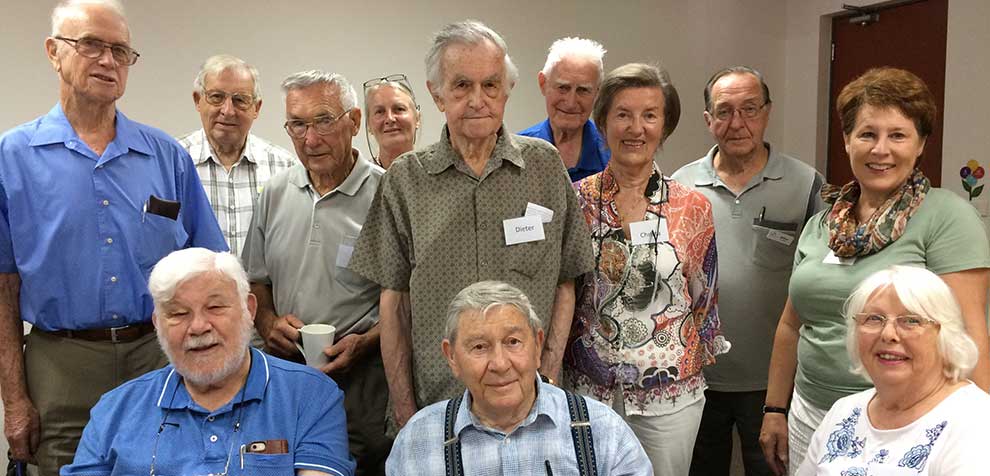
As Snowy Hydro embarks on an expansion of the Snowy Scheme a unique digital storybook project is underway to capture the voices and experiences of ten former workers.

Snowy Hydro and Woden Community Service have partnered on the project which sees former workers who are all in their 80s and 90s share their stories of determination, success and resilience with current and future generations.

Paul Broad, Snowy Hydro’s Chief Executive Officer, said that former Snowy Scheme workers overcame significant engineering and construction challenges to build one of the greatest and most complex hydro power systems in the world.

“It took ingenuity, dedication and hard work to build the Snowy Scheme. Our former workers are a critical part of our company’s history and strength, and capturing their stories is very important.

“We often reflect on and marvel at the achievements of the original Snowy pioneers. Today, as we’re designing and planning the Snowy 2.0 project we’re grateful to have the expert records and technical data from the workers who came before us”, Mr Broad said.

Woden Community Service in collaboration with PhotoAccess and Gen S Stories have the privilege of working with the former workers and bringing their stories to life.

Chris Redmond, CEO of Woden Community Service, said the idea for this project grew from a senior’s social group for ex-Snowy workers, set up by Woden Community Service in August 2016.

“The group is led by Sandy Van Der Toorn, our Seniors Social Group Coordinator. Sandy’s father worked on the Snowy Scheme and she has many fond memories of growing up there.

“We’re also very lucky to have the expertise of Jenni Savigny from Gen S Stories on this project. She enables people of all ages to use the medium of digital storytelling to share their story and assists them to tell it in their own voice (literally). We look forward to working with Snowy Hydro to make this project a success”, Mr Redmond said.

Snowy Hydro has provided $25,000 to fund the project which is due to be complete in the middle of this year. A formal premiere of the stories will be held in June 2018.

News

Snowy 2.0 Declared Critical State Significant Infrastructure

09/03/2018

Snowy Hydro welcomes the New South Wales Government’s decision to declare Snowy 2.0 as a Critical State Significant Infrastructure (CSSI) project.

The declaration signifies the critical role that the Snowy 2.0 project, together with the upgrades to the NSW transmission network, will play in providing reliable energy and large-scale storage to NSW as we transition to a low emissions economy.

Snowy 2.0’s generation and large-scale storage capabilities, along with the existing Snowy Scheme, will continue to underpin the stability and reliability of the NEM as more intermittent renewables enter the market.

The CSSI declaration is not final approval for the project.  It is a framework that sets out the robust environmental assessment and approval process that is required for the Snowy 2.0 project.

Paul Broad, CEO of Snowy Hydro said that the CSSI declaration gives the company a very clear and transparent process to follow.

“Like any other project, we are preparing comprehensive Environmental Impact Statements which will include a range of scientific and technical studies to be carefully scrutinised by the NSW Government.

“We have the greatest respect for the Kosciuszko National Park. It’s  our backyard and for almost 70 years we have been excellent responsible environment managers operating the existing Scheme across the region.

“The project’s design is being done in a way that minimises its environmental footprint.  This includes putting the majority of the physical structures, such as tunnels and the powerstation deep underground”, Mr Broad said.

The EIS will detail the components of the project, the potential environmental, social and economic impacts of Snowy 2.0 and how to best manage them.  As part of the EIS, we will undertake thorough community consultation so that the wider community can have input into the process. The EIS will also be published for public comment.

Under the CSSI process and in accordance with the NSW Environmental Planning and Assessment Act 1979, Snowy Hydro will submit an EIS for assessment by the Department of Planning and Environment, in consultation with other key agencies such as the National Parks and Wildlife Service and the Environment Protection Agency.  

News

Good business makes good business: The Case for Snowy 2.0

10/01/2018

The National Electricity Market (NEM) has long been an outstanding example of Australia’s microeconomic reform. It brought much needed competition to an industry once dominated by inefficient, state-run enterprises.

Snowy Hydro has been at the heart of this market, with volatility being the key driver of value for our business.

Our unique portfolio of fast start generation assets and large storages allows us to generate at times of peak demand, provide cap contracts insuring retailers against price volatility, and “time-shift” surplus, low price energy to high price/demand periods. We also underpin system security through synchronous generation and strong inertia capability.

Snowy 2.0 is an expansion of what we already do.  It is not new or unique. The concept of expanding our pumped storage capability has been around since the 1960s. The growth of baseload power negated its viability, but the economics are changing rapidly.

As intermittent renewables grow, the market will experience greater volatility and uncertainty. The Australian Energy Market Operator confirms this trend as we move to a lower emissions future.

Snowy Hydro has witnessed this first hand, with increased demand for cap contracts in recent times.  As it’s often said, when the wind doesn’t blow or sun doesn’t shine, how you fill the gaps forms the cornerstone of a secure, reliable and affordable NEM. In fact, filling in gaps has always been a key role of Snowy Hydro. As renewables increase, the need for our services will increase exponentially.

All independent analyses show that large scale storage is paramount to a lower emissions future. Snowy 2.0 will deliver 350,000MWh of storage to consumers at lowest cost. In fact, the project’s economics blow the alternatives out of the water. If Snowy 2.0 wasn’t built, the alternative would be a combination of batteries and open-cycle gas plants, costing at least twice as much and resulting in higher prices for consumers.

Some commentators have mistakenly sought to model Snowy 2.0 on today’s NEM, rather than the NEM we see coming. The future NEM, dominated by renewables, will require significant flexible peaking generation and storage. Snowy 2.0 will come online from 2024 at precisely the right time to fill the gaps and stabilise the market.

Snowy Hydro is already the leading provider of cap contracts. Increased market volatility, together with Snowy 2.0’s unrivalled storage capability, will allow us to expand our product offerings. These include insurance ‘floors’ and ‘collars’ (providing price certainty for wind and solar) and seasonal ‘energy exchange’ products. This will enhance long term energy security.

Snowy Hydro’s ability to provide ancillary services, critical for system security, will also increase to meet the demands of the future NEM.

As for claims that the economics don’t stack up – I refute them categorically.  Snowy 2.0 can be funded off our balance sheet, while delivering a healthy internal rate of return of 8%.

While historically we have not often used our pumping capability, we’re progressively pumping more and will be at capacity when Snowy 2.0 comes online. In fact, our analysis shows that future storage demand will surpass Snowy 2.0’s capacity from 2031, when we can again deliver by expanding the Scheme using the same reservoirs as Snowy 2.0, to benefit future generations.

The scale, complexity and challenging geology of Snowy 2.0 requires a significant investment. Like any major infrastructure project, it is not without risk. To mitigate these risks, we have handpicked a team of world experts as partners on the feasibility study and beyond as we finalise the project’s precise technical requirements.

Finally, to suggest Snowy Hydro isn’t paying for transmission is misleading.  The capital costs for Snowy 2.0 provide for the cost of the project’s transmission connection, that is, the lines connecting our assets to the wider shared network.  The shared transmission network is common infrastructure used by all generators, with Snowy Hydro being only one and in fact the most infrequent user today, given we only generate at peak times.

The transmission network was built decades ago around coal, and the ideal zones for renewables are not in the same locations. The shared network needs a major upgrade to cater for renewables growth as new projects – again one of which is Snowy 2.0 – come online. The suggestion that Snowy Hydro pay for the entirety of these upgrades is misplaced.

At Snowy Hydro, our financial track record speaks for itself. We conduct rigorous forensic analysis of all investment opportunities and apply stringent hurdles to ensure the best outcomes for our shareholders. Our independent Board exercises the highest levels of scrutiny in assessing investment decisions.

Our feasibility study demonstrated the sound economics of Snowy 2.0.  As we move towards a final investment decision late this year, our discipline will not waver. Our shareholders, and the energy industry, would expect nothing less.

News

Snowy 2.0 Feasibility Study Delivered

20/12/2017

Snowy Hydro’s independent Board of Directors has approved the Snowy 2.0 feasibility study, and for further work to be undertaken for the project to progress to a final investment decision in 2018.

The feasibility study released today confirms that the Snowy 2.0 pumped hydro expansion project is both technically and financially feasible.  The comprehensive study provides a base case design and a strong investment case that exceeds Snowy Hydro’s stringent investment hurdles, with significant input from leading experts in economics, engineering and geology.

Snowy Hydro’s CEO, Paul Broad, said that progressing Snowy 2.0 was a strategic business decision and the projected return on investment would enable the company to fund the project.

“Snowy Hydro already plays a critical role in keeping the lights on but Snowy 2.0 would supercharge our existing capabilities by adding an additional 2,000 megawatts of dispatchable generation and 350,000 megawatt hours of large-scale storage.

“Snowy 2.0 will underpin the security and reliability of the National Electricity Market (NEM) as we transition to a low emissions future, at least cost to consumers.

“As coal-fired generation retires and renewables continue to grow, Snowy 2.0’s scale and central location will provide secure and reliable energy generation and the necessary large-scale storage to prevent blackouts and lower future energy prices.

“Snowy 2.0 is a strategic long-term investment in the NEM that will firm up future wind and solar generation.  Intermittent renewables underpinned by Snowy 2.0 is a combination that could replace baseload generation when coal-fired power stations retire,” Mr Broad said.

The feasibility study outlines:

  • A strong investment case for the project and funding strategies.
  • A base case technical design, to be further refined as the project moves to final investment decision.
  • The independent estimation of costs between $3.8 – $4.5 billion, which takes into account the need for extensive reinforcement of the project’s structures due to the challenging geological conditions that were uncovered during the geotechnical drilling program.
  • If Snowy 2.0 is not built, the NEM would need a combination of batteries and gas peaking stations to meet future energy needs.  This would cost at least twice as much as Snowy 2.0.
  • A project schedule that will see the first power generated from Snowy 2.0 in late 2024, in time to meet market needs.

“Completing this study is a significant and exciting milestone for us but it’s only just the beginning. The sheer size of Snowy 2.0 makes it a complex and significant project that will put the Snowy Mountains back in the global spotlight,” Mr Broad said.

Between now and final investment decision, Snowy Hydro will undertake further work including additional geotechnical drilling, issuing project tenders, finalising funding for the project and working through well established and rigorous environmental and planning approval processes.

The project will also boost economic activity across the Snowy Mountains from employment opportunities across the supply chain and in supporting services.

Snowy Hydro would like to acknowledge the work of our lead study engineer SMEC Australia and the Australian Renewable Energy Agency for their contributions to the study.

The feasibility study and more information on the project can be found on our website here.

To watch a video on the project click here.

News

Snowy’s highest power station to reach new heights

10/11/2017

Snowy Hydro, working with Andritz Hydro, is about to commence detailed design work for the replacement of the generator in unit one at Guthega Power Station. After more than 60 years of reliable operation this is the first time any generator across the Snowy Scheme has needed to be replaced.

The generator is connected to the turbine and is the part of the machine that converts the power produced by the spinning turbine into electrical energy for consumers. This project is certainly not your average flat pack. The generator will be assembled from thousands of individual pieces and weighing in at 230 tonnes it will need specialised trucks and trailers to get it on site.

Paul Broad, CEO of Snowy Hydro said this $13 million replacement project was the latest example of the company’s strategic investment in the Snowy Scheme.

“It’s not just Guthega Power Station we’re investing in. We have a thorough asset maintenance and modernisation program that upgrades our power stations and the water infrastructure across the Snowy Scheme.

“We’ve undertaken asset improvements that have actually increased the Scheme’s total generation capacity”.

“We’ve also implemented new technologies that allow us to start our generators faster, respond more quickly to changing market conditions and run our power stations remotely through our central control centre”, Mr Broad said.

The new generator will have a higher design rating (40 megawatts) than the existing unit to match the previously upgraded turbine. Every generator across the Scheme can be used independently and therefore each unit wears differently and is replaced based on its condition rather than age.

After undertaking a competitive tender process Snowy Hydro appointed Andritz Hydro to undertake the design, fabrication, install and commissioning of the generator. Andritz Hydro is a global supplier of electromechanical systems and services for hydropower plants and hydraulic power generation. The detailed design process and unit fabrication is expected to take around 12 months.

The Guthega Power Station houses two 30MW hydro-electric generating units and was the first power station built with construction starting in 1951. It’s on the Snowy River, just 12 kilometres from the summit of Mount Kosciuszko and sitting at 1330 metres above sea level, it is the highest power station in the Snowy Scheme.

Media contact: Stephanie McKew – General Manager, Corporate Affairs & Media 0409 298 757

News

National Science Week Winners

31/10/2017

After much deliberation from the judging panel, ten winners of the ‘Science of the Snowy’ competition were announced today.

The winners came from schools across the Snowy Mountains. The calibre and creativity of entries greatly impressed the judging panel which included the Hon Mike Kelly Member for Eden Monaro, Carolyn Ewart, from Country Universities Centre, and Tumut radio personality David Eisenhauer.

Chief Executive Officer, Paul Broad, said it was fantastic to see local children so engaged in science and technology. With more than 40 entries from Batlow to Bombala, the judges had a very tough job selecting the winners.

“Snowy Hydro is a modern and growing business. While some parts of the Scheme are more than 60 years old, we’re constantly upgrading our assets and integrating the latest technology into our operations.

“The level of research and effort that went into the entries shows we have many budding scientists and engineers in our local community.

“It’s great to see curious,young minds and I hope to see some of their names pop up on applications for jobs at Snowy Hydro in the years to come”, Mr Broad said.

Recognition and thanks must go to our judging panel and all the teachers that encouraged their students to enter the competition.

Competition winners: Jamie Jessup, Jackson Trellis, Ashley Lloyd, Dakota Simpson,
Hayley Bell, Sophie Wood, Courtney Bennett, Bridie Hampshire and Tye Gulliford.

Along with the 9 students, the judges also selected the entry from the Batlow Technology School to round out the winners.

Highly commended entries Brandy Cotty, Luke Jones, Taya Douch, Lily Edgecombe, Jemima Merritt, Finn Sullivan and Rachael Babidge.

The ‘Science of the Snowy Competition’ was launched as part of Snowy Hydro’s National Science Week Celebrations. To enter students in years 3-6 in the Snowy Mountains area shared their favorite favourite science, engineering, or technology fact about the Snowy Scheme.

The winners will receive a behind the scenes tour of the Snowy Scheme. Both winning and highly commended entries will be displayed in the Snowy Hydro Discovery Centre in Cooma.

News

National Science Week Competition

14/08/2017

‘The Science of Snowy’

As part of National Science Week this year, Snowy Hydro is running a ‘Science of the Snowy’ competition for Snowy Mountains students in years 3-6.

Paul Broad, Chief Executive Officer, said that National Science Week was a great opportunity for students to learn more about the science and engineering aspects of the Snowy Scheme.

“The construction of the Snowy Scheme was one of the civil engineering wonders of the modern world and from our pioneering past, we have grown into a modern and innovative energy company,” Mr Broad said.

To enter the competition just tell us your favourite science, technology or engineering fact about the Snowy Scheme. Your entry can be in words, pictures, a drawing or even a video.

Mr Broad said his favourite fact is that the Snowy Scheme acts like Australia’s biggest battery.

“While the Snowy Scheme may not look like a typical battery, it acts just like one. In the same way as a battery stores energy, the Snowy Scheme stores water which can be quickly used to create energy when it’s needed”, Mr Broad said.

Each winner will get two tickets to a VIP tour of the Snowy Scheme (including a power station) with some of Snowy Hydro’s very own scientists and engineers.

All winning and highly commended entries will also be displayed in the Snowy Hydro Discovery Centre in Cooma.

The competition is open to students at schools within the Snowy Valleys Council and Snowy Monaro Regional Council regions and in years 3-6.

The ‘Science of the Snowy’ competition opens on 14 August 2017 and closes at 5pm on 22 September 2017. An independent panel of judges will select the winners, with the panel to be announced shortly.

For more information on how to enter and some Snowy Hydro topic ideas visit our NSWk competition page here