
Monica captures essence of Snowy 2.0 purpose
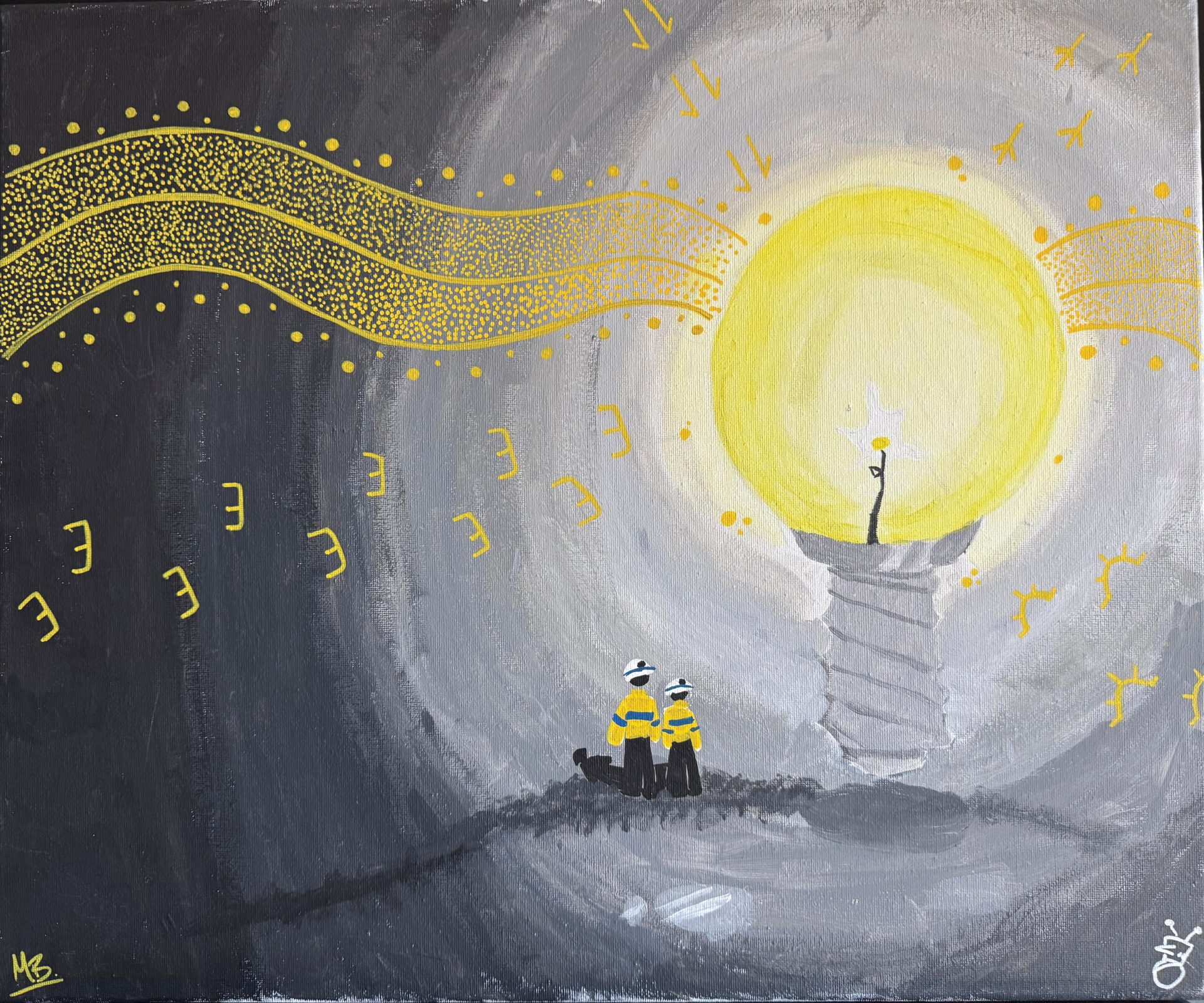
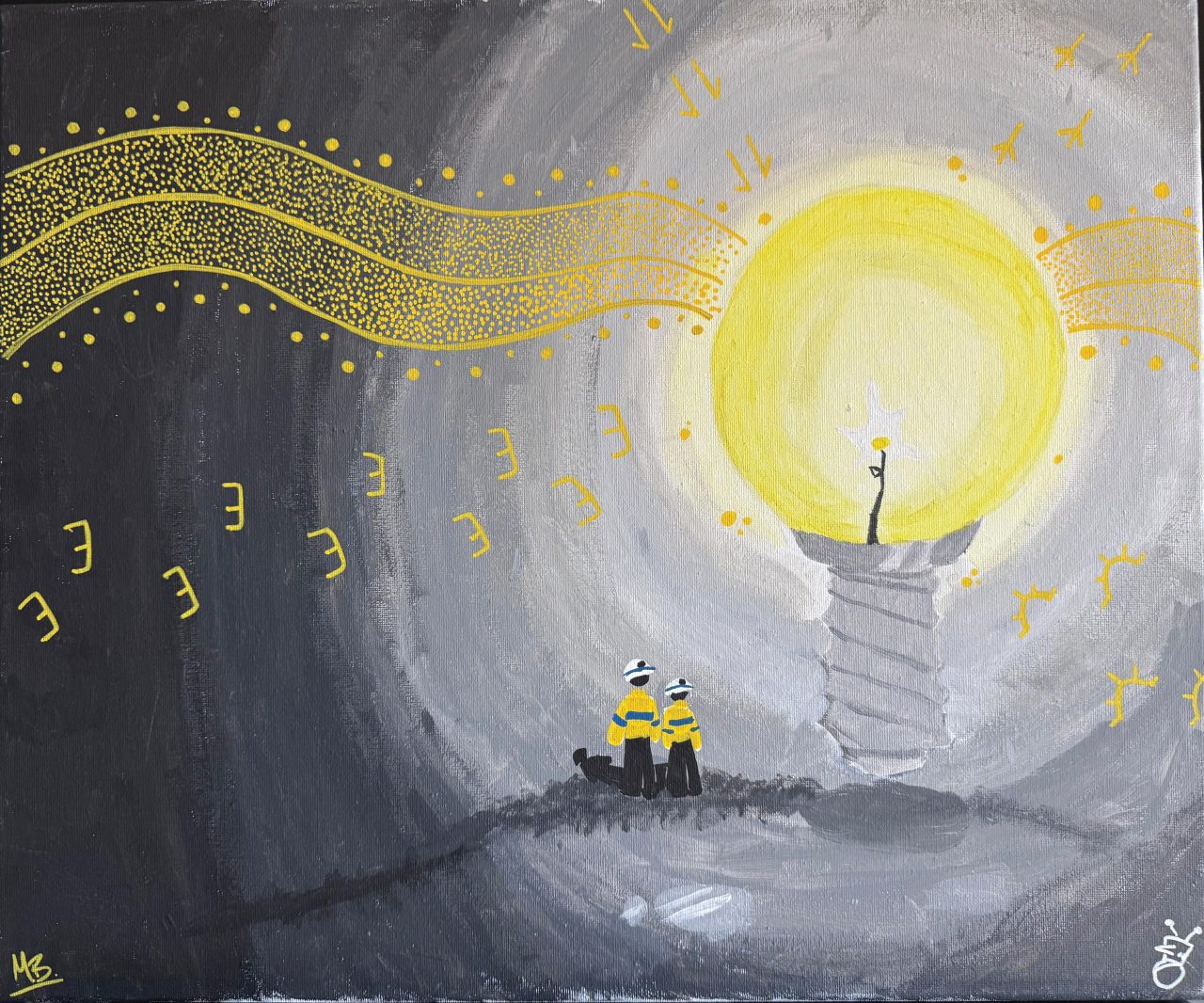
The fourth mega tunnel boring machine on Snowy 2.0 is named after Tumut High School student Monica Brimmer, whose artwork won first place in a First Nations art and storytelling competition hosted in partnership by Snowy Hydro and the Stars Foundation.
“Knowing there’s something really important to the project out there with my name, in the mountains, is really cool,” Monica said.
“I’ve been interested in engineering for quite a while – and it’s pretty cool to put art and engineering together as part of something I could put my mind to.”
TBM4 competition winner Monica Brimmer
(Year 9)
This painting represents two things – the electricity being created underground by the TBMs, and the flowing water of the dams.
The colourless background represents the tunnels of the TBM, while the animal tracks symbolise us moving towards a greener future in which the land and our animals are better cared for.
Ruby McNally
(Year 9)
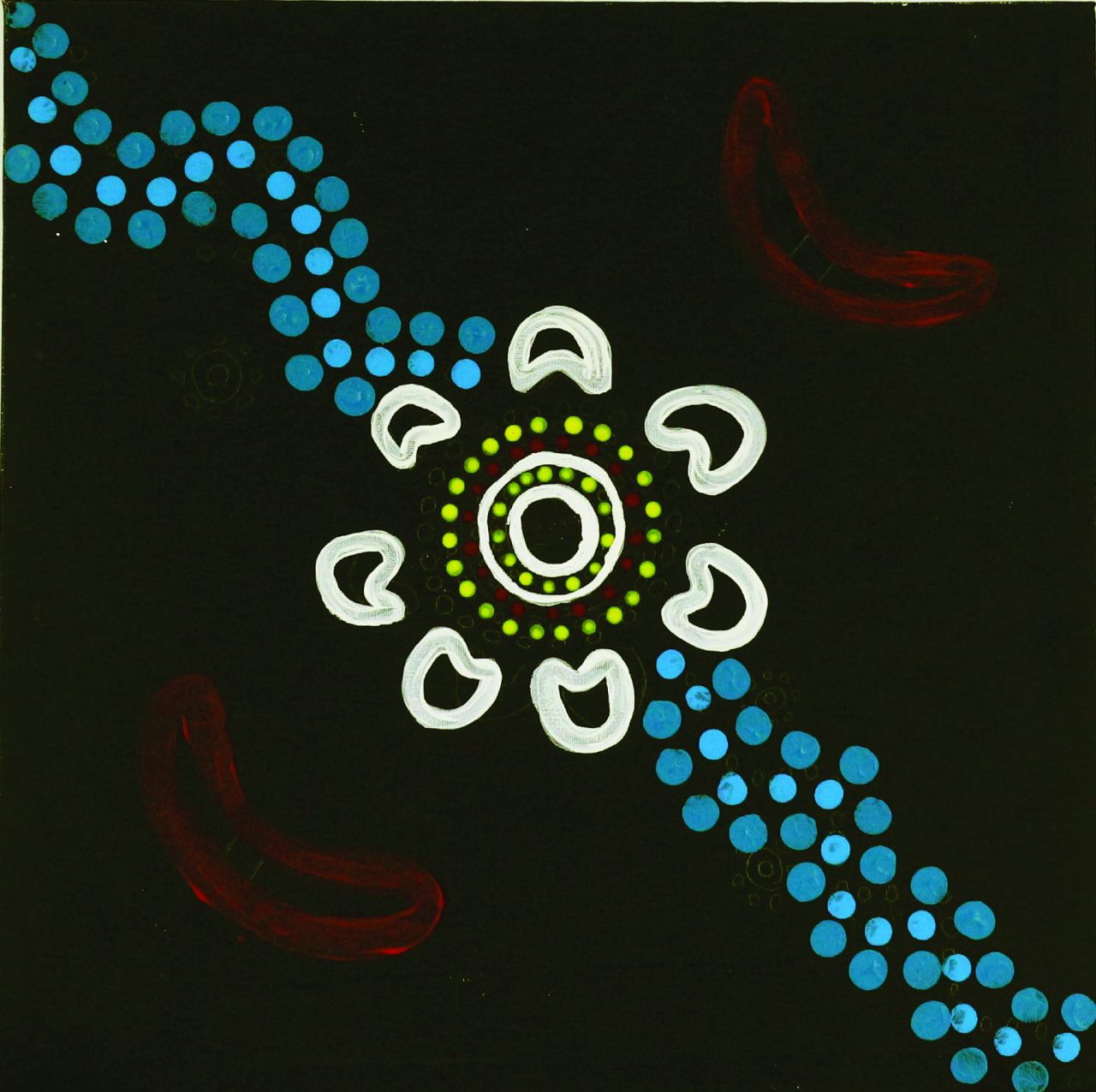
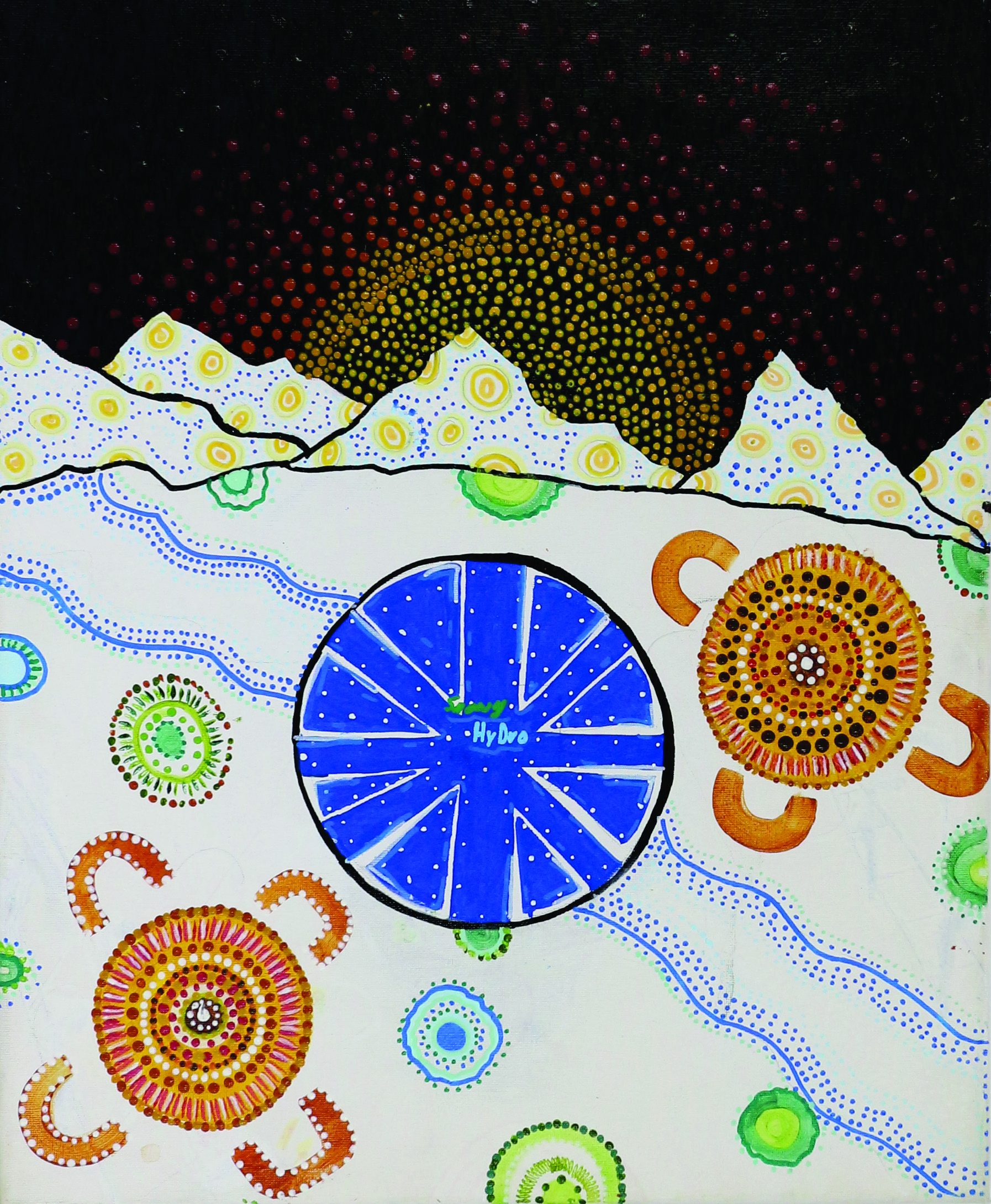
My artwork is a representation of the Snowy 2.0 Scheme. The Power Station is in the centre of the artwork, being an important and central focus to the energy output.
The symbols around it represent the dedicated Snowy 2.0 workers. The blue is the water travelling through the machine to create the energy.
Dakoda Hibbens
(Year 8)
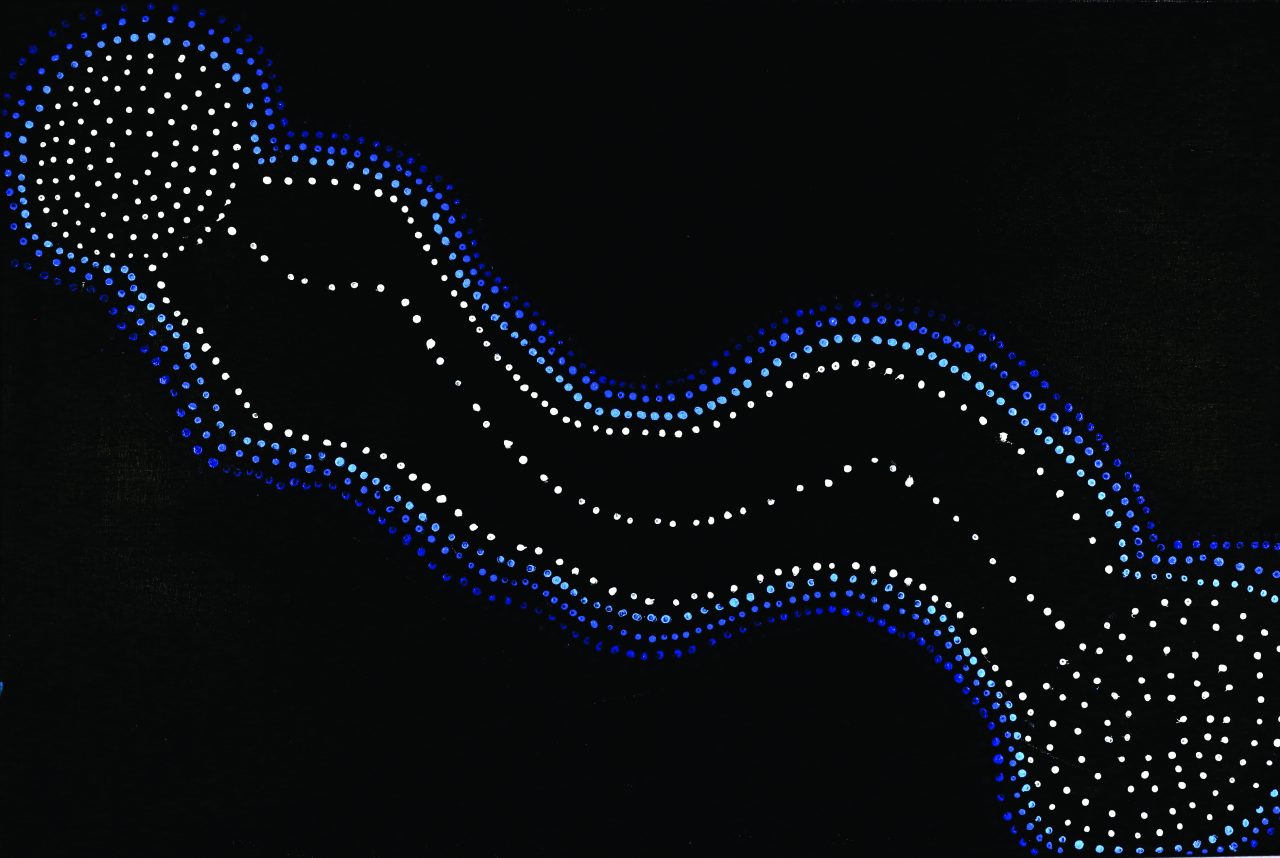
My painting represents the Tantangara and Talbingo reservoirs, which are already part of the Snowy Scheme.
It’s symbolic of water being pumped uphill to the higher reservoir during periods of low energy demand and then releasing it downhill to generate electricity when needed.
Skye Burns
(Year 7)
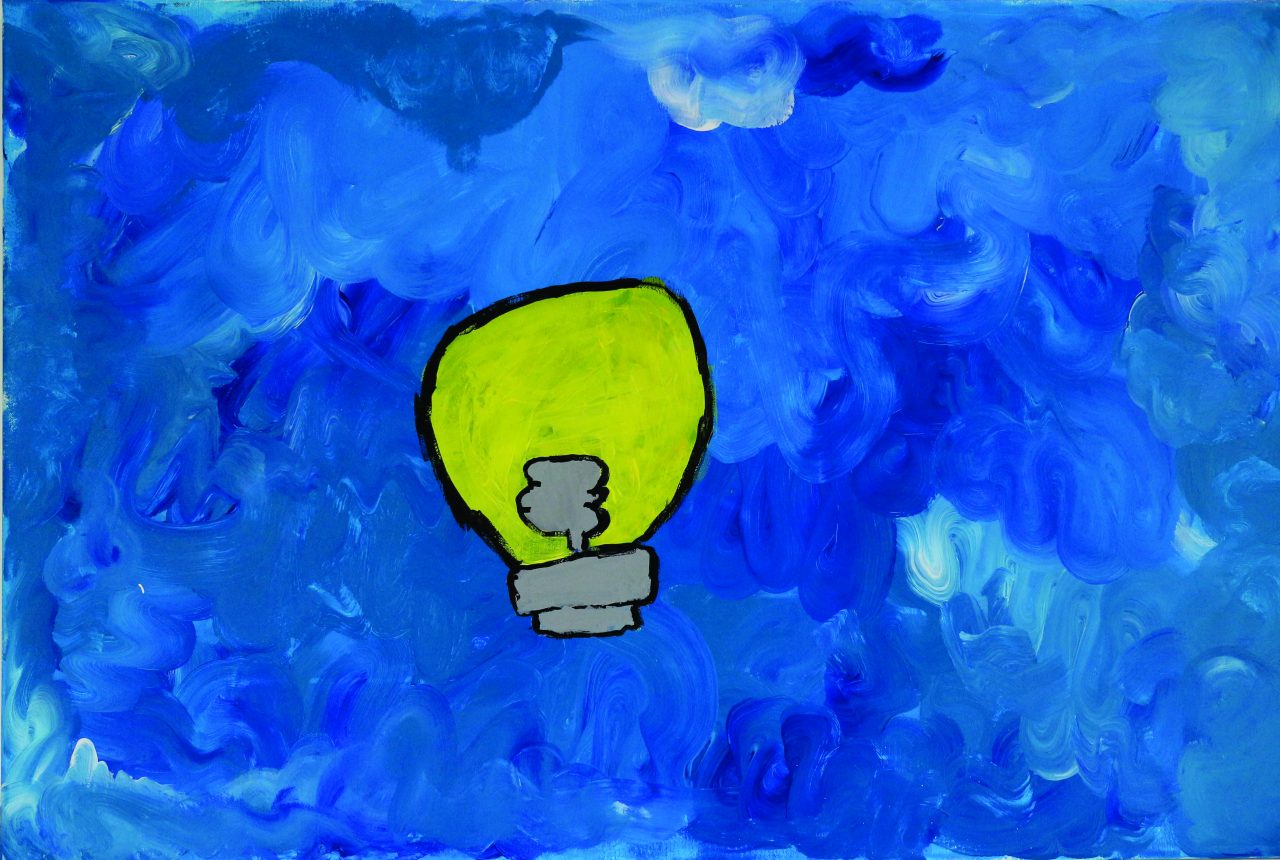
My painting represents the use of water to create energy. The background is swirls of blue representing water and in the front and centre is a light bulb which is shining bright representing the electricity that is produced through Snowy 2.0.
Jazmine Crompton
(Year 11)
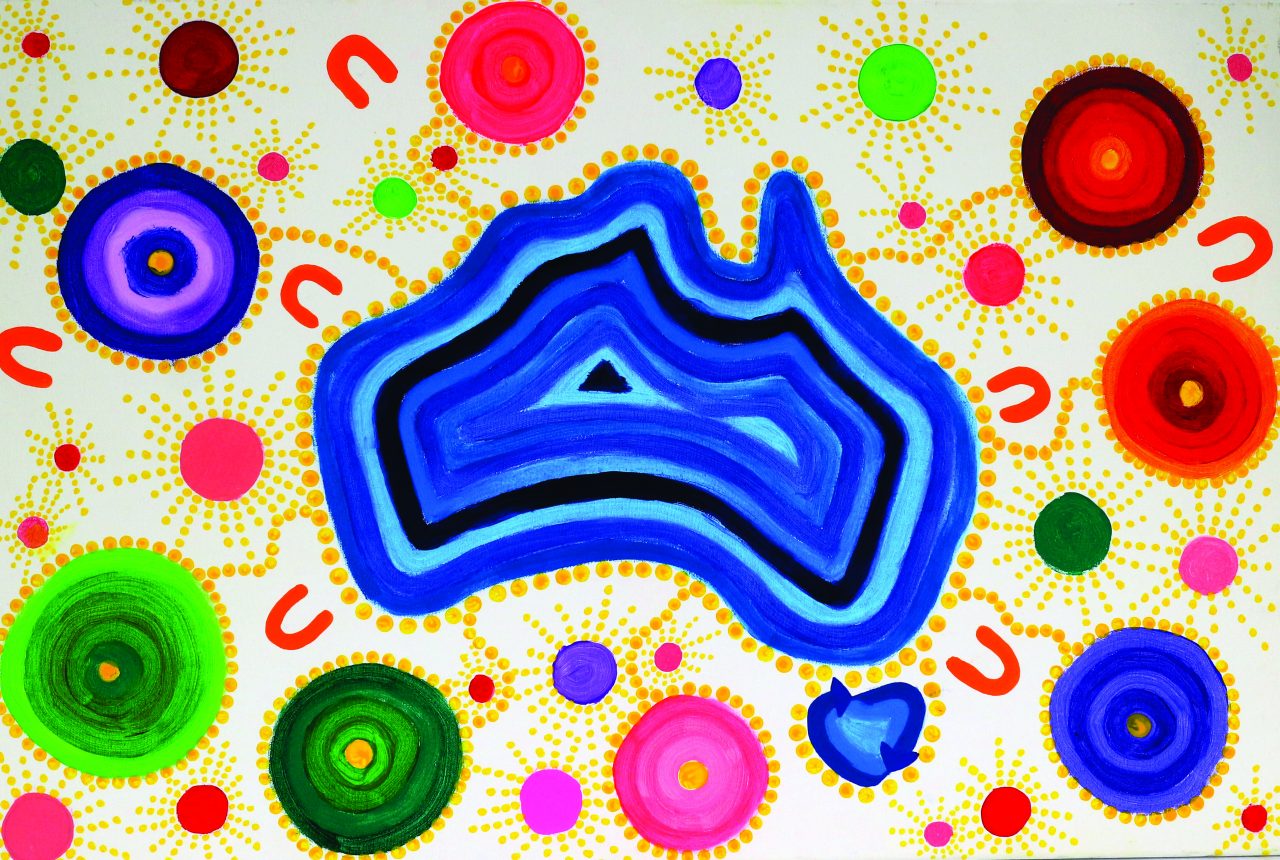
Connecting Australia Through Renewable Energy.
The artwork celebrates the communities powered by Snowy Hydros Renewable Energy.
A dam shaped like Australia with Tasmania shaped like a recycling symbol reflects sustainable water use. Yellow dots show energy flowing to diverse communities, each uniquely represented. Figures include Snowy Hydro staff and locals, symbolising collaboration and a shard future.
This piece also honours Snowy Hydros support of the Stars foundation and its impact on young Aboriginal and Torres Strait Islander women – highlighting a shared commitment to empowerment and sustainability
Charlotte Brimmer
(Year 9)
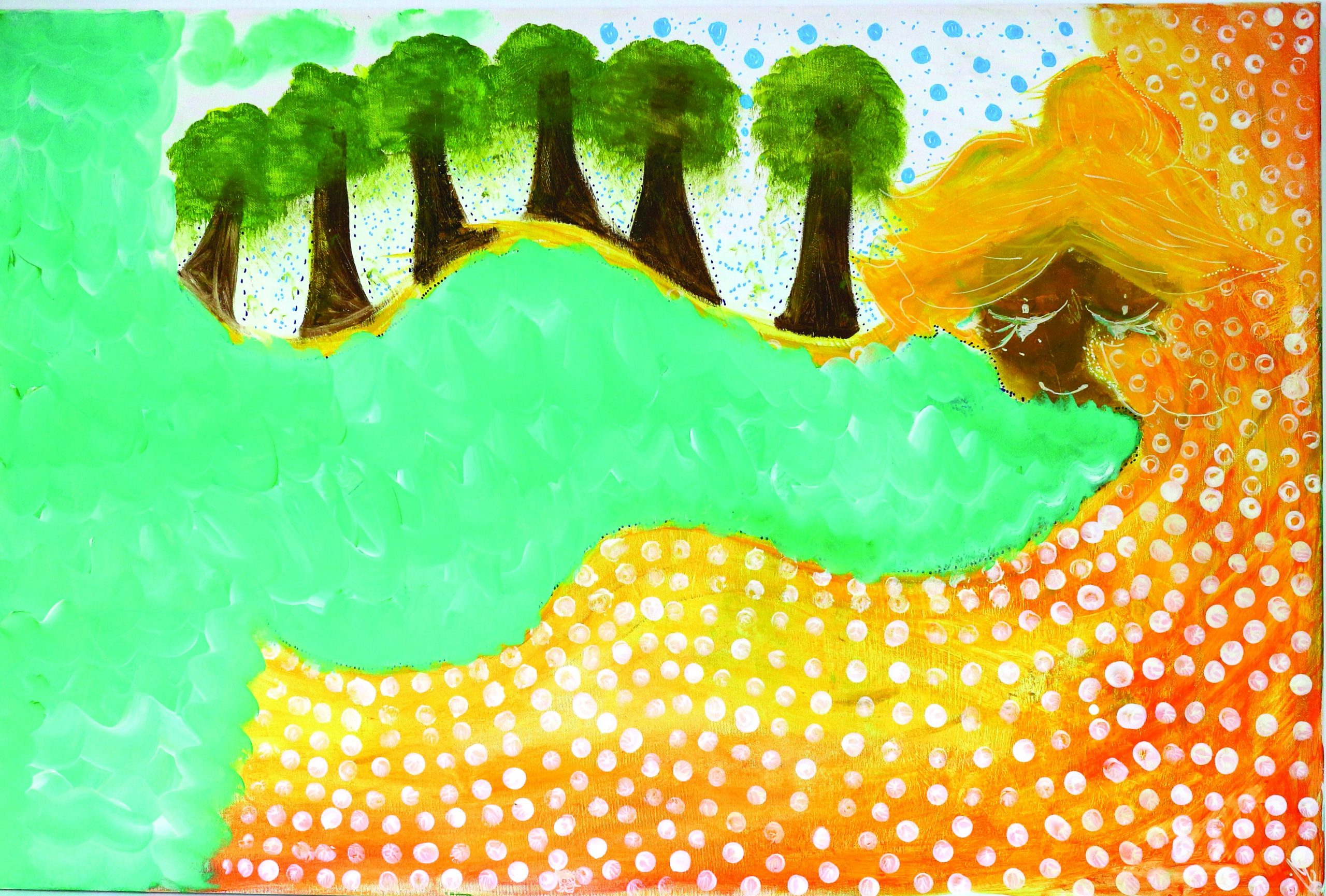
My painting represents mother nature and how we can use Earth’s natural resources to create what we need.
The yellow is the source of energy, the blue is the water which is needed to generate the energy. The water brings the trees to life and the trees create oxygen.
Bryelle Scobie
(Year 9)
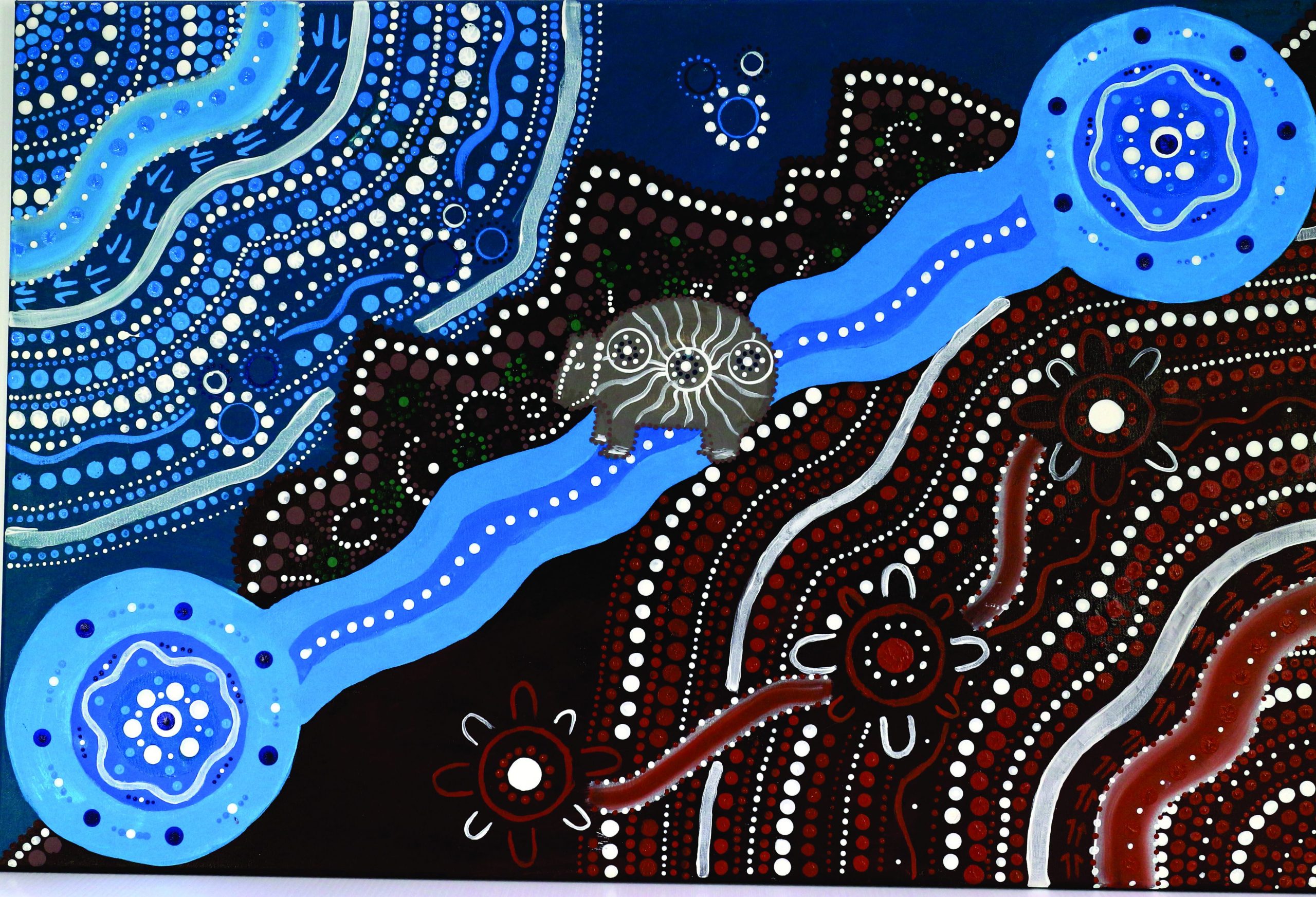
This painting represent the new TBM at the Snowy Hydro 2.0 Project. It connects the Talbingo Dam to the Tantangra Dam, generating electricity underground. The blue is for the sky and the brown is for the ground, the wavy lines symbolise rain to fill the dams to make electricity.
The wombat represents the machine tunnelling between the dams, the meeting places symbolise the people that are working on the project. The mountains represent the snowy mountains the project takes place in and the green represents the trees.
The stars symbolise the three machines before and the lines on the wombat represent power/electricity. The three dots on the wombat represents my pop (Garry Bell) my aunty (Tenesha Baker) who both work in the Snowy 2.0 project and me (Bryelle Scobie). The name Waawii comes from the Wiradjuri name meaning waterspirit.
The Stories of the Waawii or otherwise known as Biladah are mainly about the responsibility of the Wiradjuri people to care for the land and water and ensure its resources are used sustainably for the present and future generations
Sierra Connolly
(Year 10)
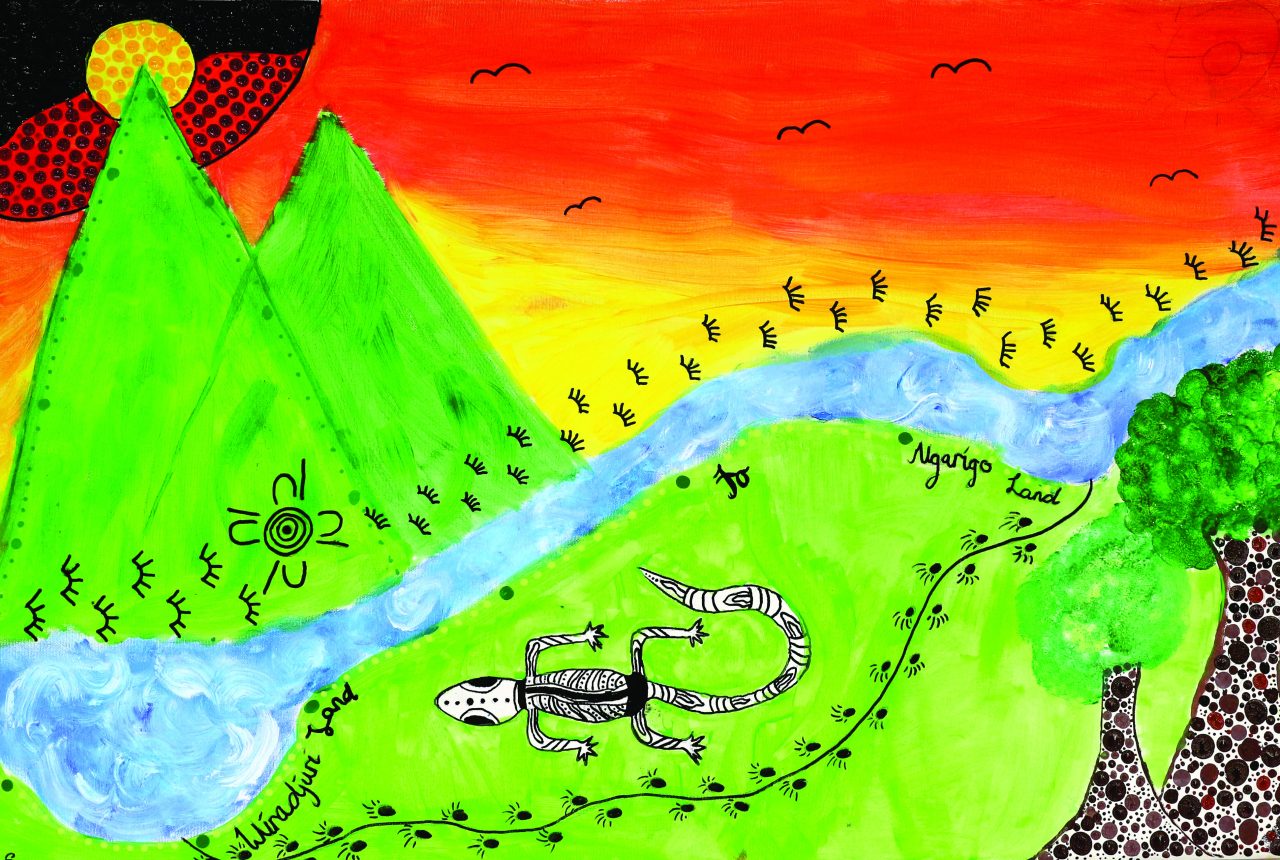
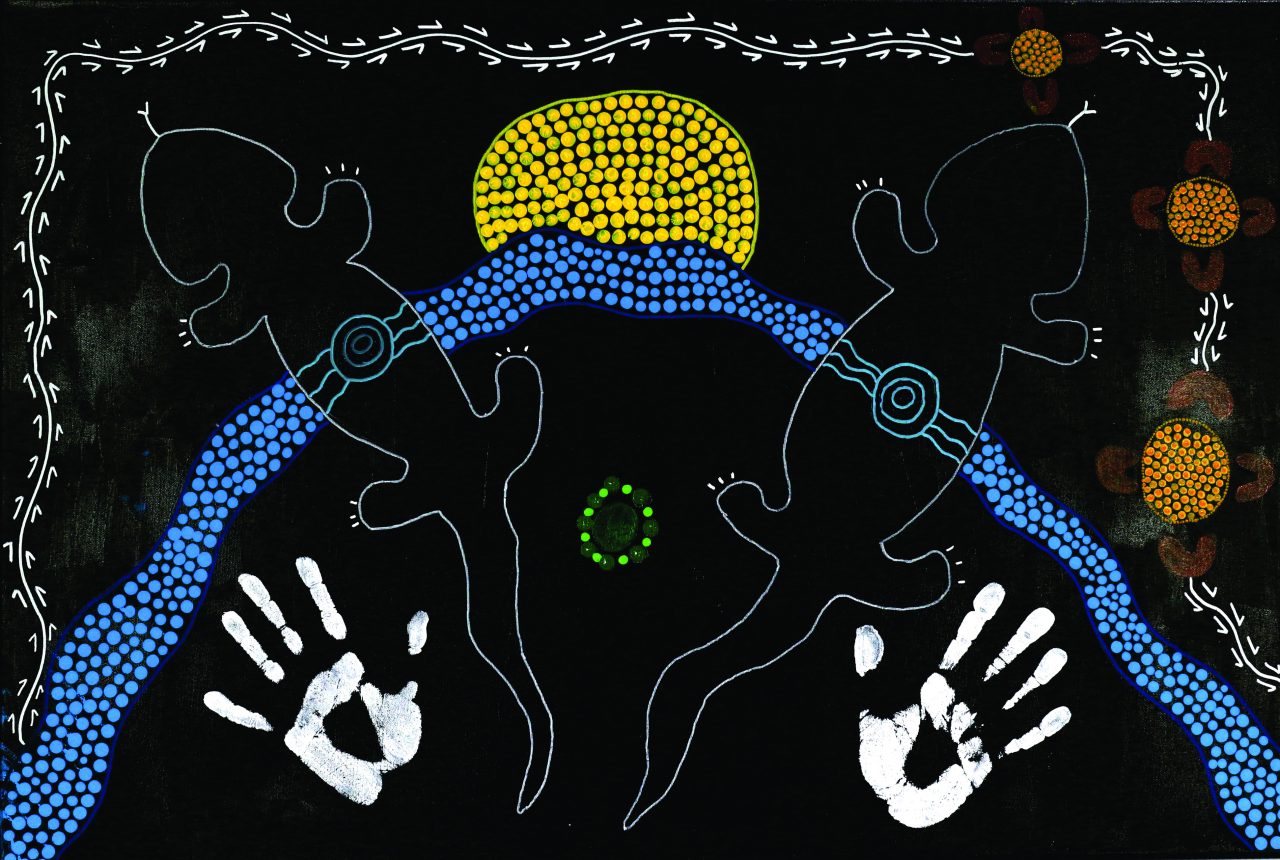
I created this piece to show the connection between the mountains and the Snowy 2.0 project.
“We wanted to honour the land where the giant tunnels connect the Tantangara and Talbingo dams, showing the hidden layers that are usually tucked away deep underground.
Marli Hartshorn
(Year 10)
My artwork is a map of what’s happening beneath our feet. It follows a tunnel boring machine on its journey through the Earth.
I wanted to show respect for the Country it’s moving through and reveal the unseen parts of the mountains that most people never get to see.
Zoey Oaive
(Year 8)
In this piece, I’ve explored the connection between the Snowy 2.0 project and the land itself.
The work peels back the surface and highlights the intersection of engineering and Country.
Makayla Lotter
(Year 7)
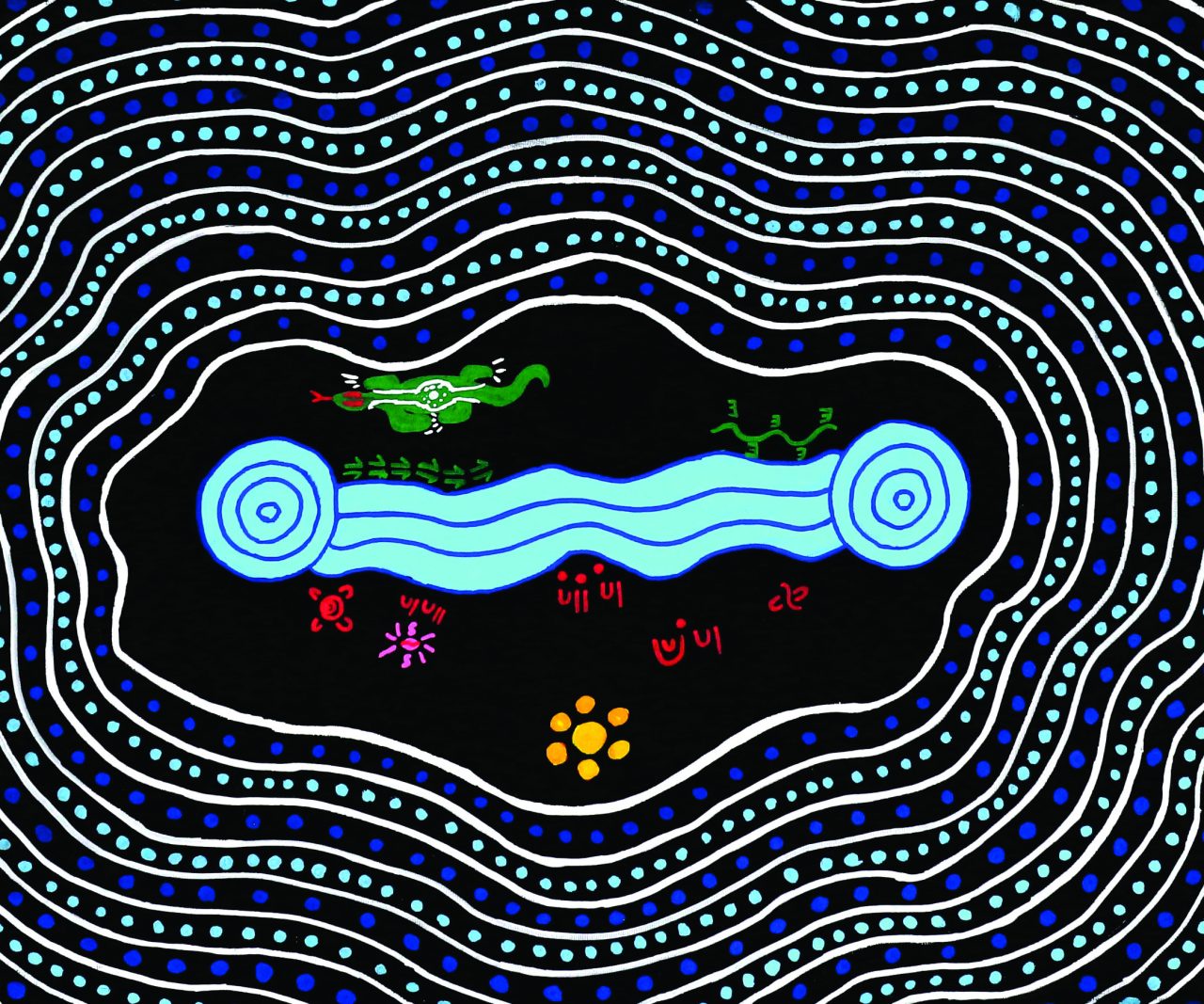
My painting represents water as being the main source of energy as it is an important part of our existence. In my painting the water is the primary source of energy in the middle of the artwork.
The waterhole has brought different groups of people together as well as different animals.
Keilani Piemonte
(Year 8)
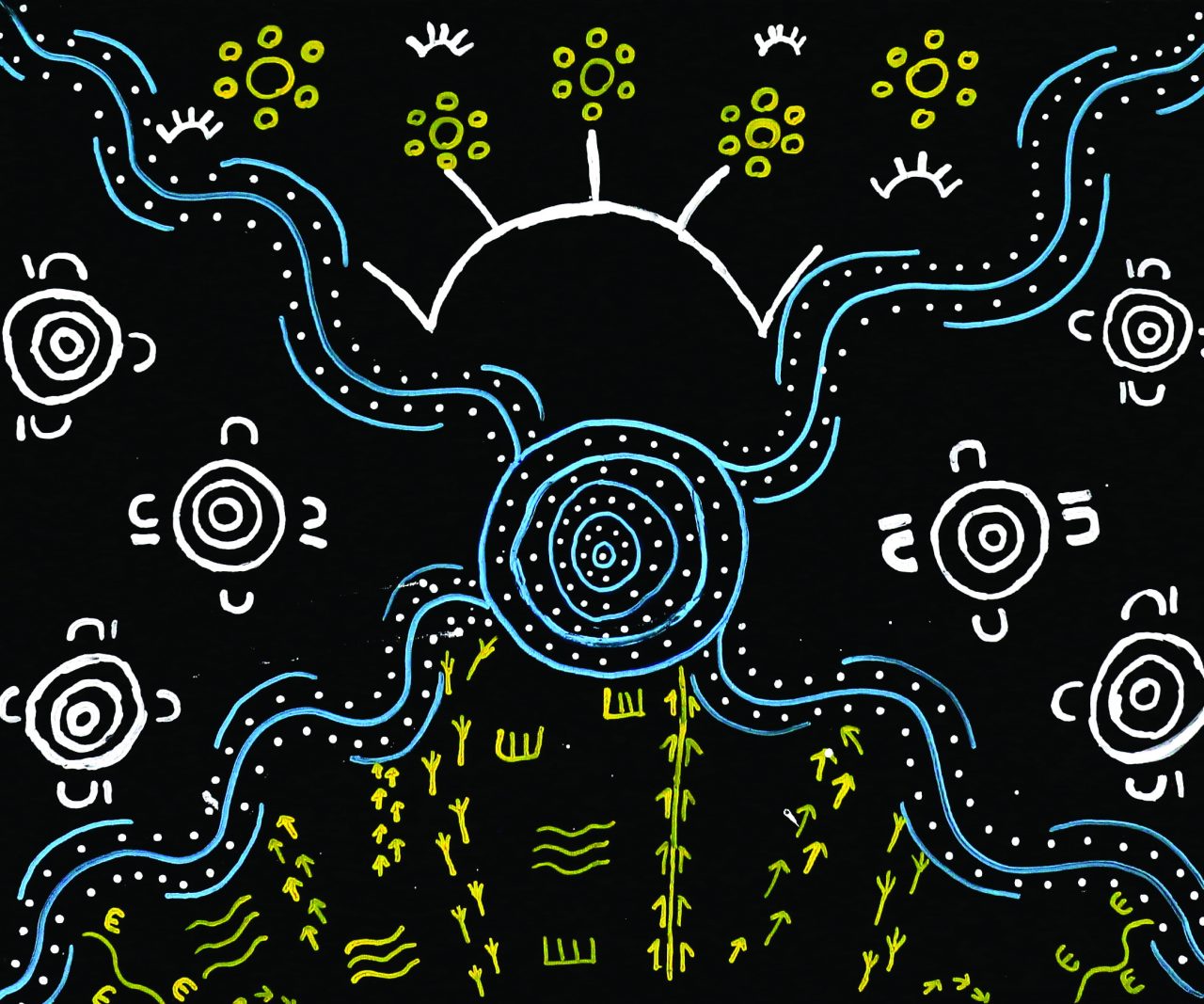
The Blues Represent the water we use at Snowy 2.0. Flowing through the land and helping create clean energy. The meeting places stand for the people coming together as a mob to work, learn and share knowledge.
The mountains show where Snowy 2.0 is located, grounding the painting in country. The sky shows the sun setting over the mountains, reminding us the natural beauty and of power of nature.
About Stars Foundation
Established in 2015, the Stars Foundation provides a holistic mentoring program that supports more than 4100 female First Nations students in primary and secondary schools across all mainland states and the Northern Territory.
Key indicators have shown:
- average school attendance for Stars students in 2025 was 78 per cent compared to 67 per cent for all Indigenous students at Stars’ partner schools;
- 90 per cent of 2025 Year 12 Stars students successfully completed their final year compared with the national Indigenous average of 68 per cent;
- 78 per cent of 2024 graduates successfully transitioned to work or further study.
Central to Snowy Hydro’s partnership with the Stars is a shared focus on education and mentorship.
Through our joint efforts, we seek to provide young Indigenous women with the tools, guidance and support they need to realise their full potential.