
On this page
Current works
After completing commissioning of Kurri Kurri Power Station on its primary gas fuel, testing is now focused on the station’s backup diesel fuel.
Kurri Kurri is designed to run only for a minority of the time, providing essential on-demand energy to help keep the lights on when electricity demand is high. It will operate using gas as its primary fuel, with diesel being used as a backup on rare occasions and under strictly regulated limits.
Commissioning a power station is a highly complex process, designed to rigorously test systems to identify and resolve issues before a facility becomes operational.
During recent testing at Kurri Kurri Power Station, we experienced some issues that prevented the station from starting on its backup diesel fuel.
We worked closely with the turbine manufacturer, Mitsubishi Heavy Industries (MHI), who have now resolved several of these initial issues, so we can proceed with diesel testing.
Our update of 12 August said we aimed to restart diesel testing later in August. The schedule has now been clarified and testing is due to restart next week, with a run on the primary gas fuel on Monday 31 August to prepare for diesel testing on Tuesday 1 September.
What are we doing differently?
Snowy recognises that plume and odour are important issues for the community. Our commissioning is subject to strict environmental limits and we have designed the testing approach to continue to reduce impacts to local communities, including by only testing overnight.
A dedicated community team is available 24 hours a day, 7 days a week during the testing period. The team is working with operational experts to investigate and respond to any resident concerns immediately.
We consider a variety of factors before starting and our approach can change depending on weather conditions, operational checks and specific tests. Neighbours may experience some noise during overnight testing. To minimise any disruption, our team is actively monitoring noise levels both onsite and throughout the local area.
Why is this testing important?
This final testing phase is essential for ensuring the plant’s safety and long-term reliability. By testing the backup diesel systems now, our team gains a complete operational understanding of the equipment under load. This guarantees that when the grid is under stress, the station will kick in safely and exactly as designed.
Why is Kurri Kurri Power Station needed?
Kurri Kurri Power Station will play an important role in ensuring electricity reliability and enabling Australia’s transition to renewable energy. It will provide 660 megawatts of electricity when it’s needed most, allowing more wind and solar generation to enter the grid.
Contact us 24/7
Your real-time feedback is vital to helping us manage this final commissioning phase responsibly. If you experience any issues, notice a strong odour, or want an immediate operational update, please reach out to us right away.
Our team is monitoring these channels around the clock:
- Community Hotline (24/7): 1800 570 529 (for immediate issues or complaints)
- Email: community@snowyhydro.com.au
Key dates
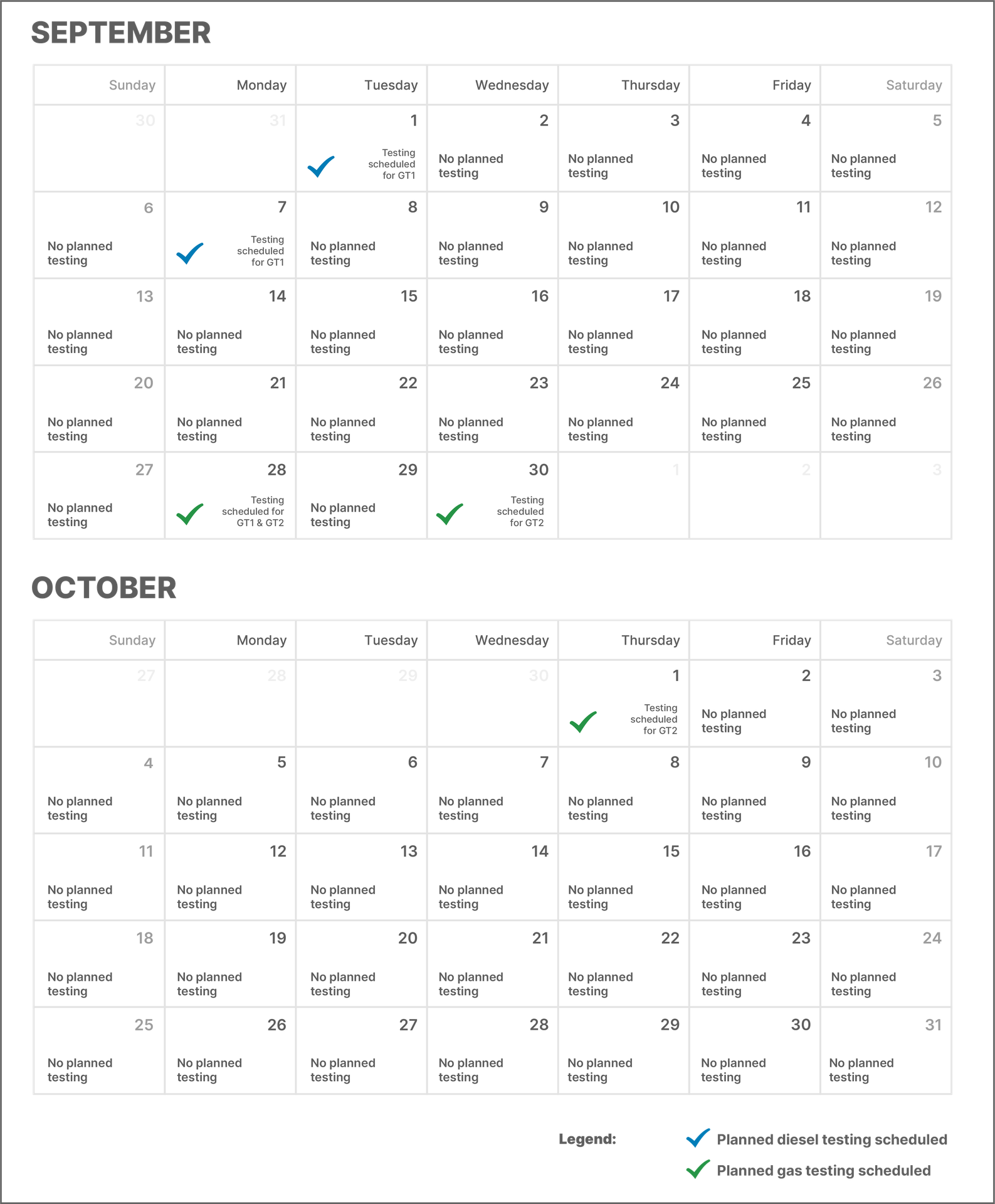
Last updated: 30 September 2026
Note: Testing is scheduled for the dates above. This testing schedule is subject to change. The schedule above will be updated regularly.
Sign up to our mailing list
We encourage local community members to sign up to our mailing list so we can provide updates on Kurri Kurri Power Station. Fill out the form below to receive the latest information.
If you have any questions or concerns, please don’t hesitate to call the Snowy Hydro Community Hotline at 1800 570 529 or email us at community@snowyhydro.com.au
FAQs
What is the Hunter Power Project?
The Hunter Power Project, known as the Kurri Kurri Power Station, is critical to ensuring a responsible transition to renewable energy in Australia. When fully operational, it will be able to provide fast-start, dispatchable energy to support the grid when it is most needed. Read more about the Project on the Project home page.
What does “testing and commissioning” mean?
Testing and commissioning is the final phase focused on ensuring all systems and components are properly installed, tested, and functioning according to the project requirements and specifications.
First Fire as part of this process is when the gas turbine ignites and reaches full speed for the first time. Read more about First Fire here.
What is the smoke coming out of the stacks?
We are in the process of testing both of our generators, which involves burning both diesel and gas to ensure the system operates safely and smoothly. The emissions you see during commissioning are a result of our full speed no load testing, which will not be the case during operations where fuel will be used more effectively as we send power to the grid.
The impacts of our recent testing is currently under investigation and we will communicate as required in due course.
Will emissions always look like this, even during operations?
Once operational, no visible plumes are expected to be seen from the stacks as the emissions during operation will be primarily from the combustion of gas.
In the rare instances where diesel must be used, a small plume will be seen for twenty minutes before disappearing completely.
Will the power plant be continuously running?
No. Designed to operate only for a minority of the time, the power station will help take pressure off wholesale electricity prices and prevent blackouts by providing up to 660 megawatts of power when demand is high and supply from wind and solar is limited.
Approval has been granted for the power station to operate up to 12.5% of the year or 1100 hours. However, the expectation is it will operate for a lesser period of time.
What kind of continual air monitoring has been formally agreed upon?
All monitoring is described within our EPL, which was administered by the EPA. Figure M2.2 Air Monitoring Requirements documents the list of pollutants monitored.